Comment

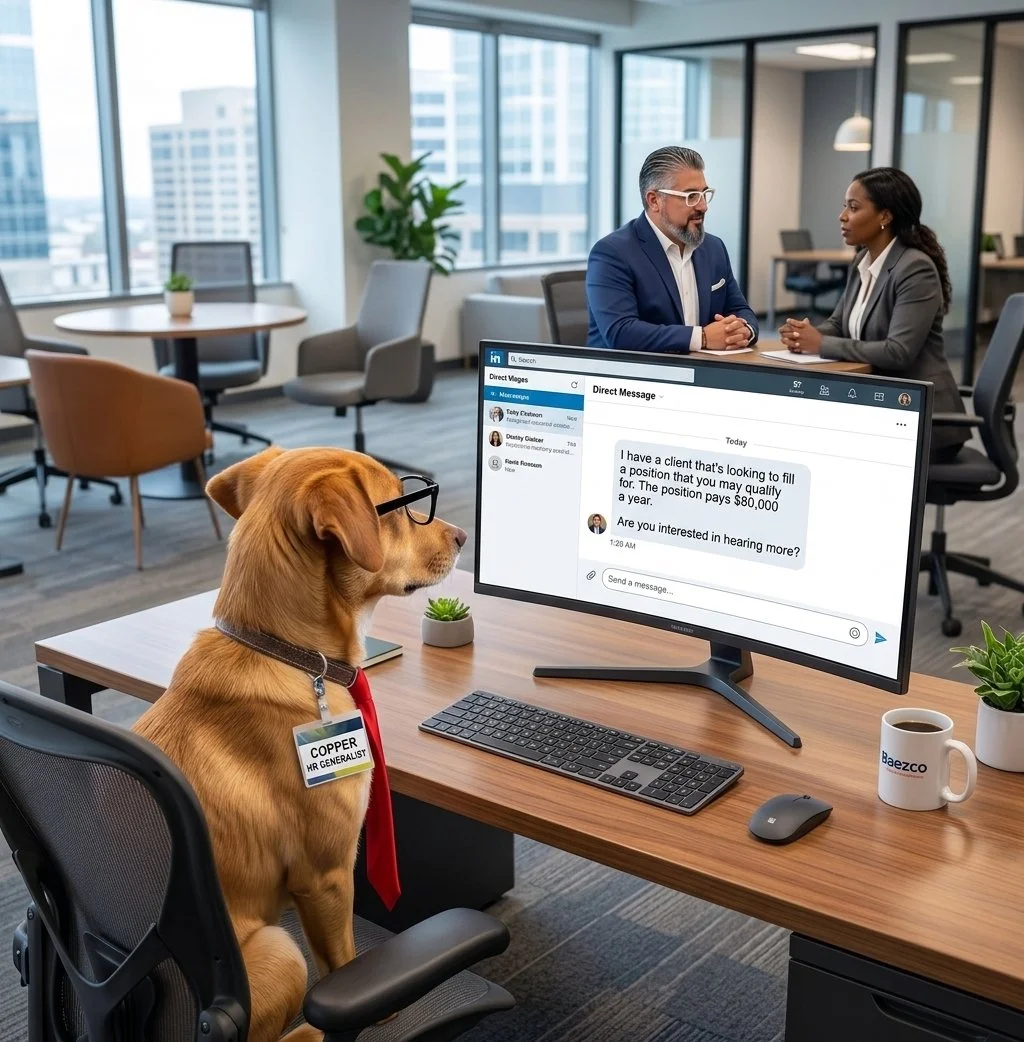
She Asked for $50,000. You Know She Is Worth $80,000.

An HR generalist sits in front of your hiring panel. Her background is strong. She answers the situational questions like someone who has actually lived them, because she has.

Near the end, somebody asks about salary expectations. She says $50,000.

Everyone in that room knows the job is worth $80,000.

Nobody corrects her. The offer goes out at $50,000. Somebody on the panel calls it a good day.

You did not save $30,000

You created a $30,000 gap and left it sitting out in the open where anyone can find it.

Recruiters find gaps like that for a living. I find them for a living.

It takes one message in her LinkedIn inbox. Would you be open to a conversation about a role that fits what you do and pays $80,000. That is the entire pitch.

She does not have to be unhappy for that message to land. She only has to be curious. Most people are.

The counteroffer is a confession

So she takes the call. She interviews. She gets the offer.

Then she does what most people do. She brings it to her boss and asks if the company can match it.

And the company matches it.

Think about what she just learned in that meeting. The money was there the whole time. The budget existed. The job was always worth $80,000. She was paid $50,000 because she did not know to ask for more, and nobody in the building volunteered the difference.

A counteroffer is not a save. It is an admission that the money existed and you were not sharing it.

You might keep her for another year. You will not get her trust back. From that day forward she knows exactly how her pay gets decided at your company, and it is not by what she contributes.

What it actually costs you

Start with the obvious. You are now paying $80,000 anyway, so the savings never existed. You just paid for them with her loyalty.

Then look at the ripple. She talks. Not out of spite. She mentions it at a chapter meeting, or to the friend who referred her, or to the next generalist who asks what it is like to work for you. Your pay reputation gets written by the people you underpaid.

Look at your own team too. When she gets bumped to $80,000 and the person next to her doing similar work is still at $55,000, you have a second problem you did not budget for.

Pay the band, not the ask

The fix is not complicated. It is just a decision you have to make before the interview, not during it.

Build a range for the role based on the work, the market, and what you can actually afford. Do that before you post the job. Then pay against that range and the person's skills, not against the number they happen to say out loud.

When somebody comes in low, tell them. Out loud, in the room. You asked for $50,000. This role pays $80,000 and here is why we think you belong at $80,000.

That conversation does more for retention than anything you will do later. People remember the day a company told them they were worth more than they asked for. And they stop taking recruiter calls, because a recruiter cannot offer them anything they are not already getting.

Paying somebody what they are worth before they ask is not generosity. It is the cheapest retention tool you own.

What to do this week

Write a salary range for every open role before the first interview, and put it in the job posting.

Stop using salary expectations as a screening filter. Ask what would make a move worth it, then pay your range.

Audit your current team against your own ranges. If somebody is sitting well under the range for work they are already doing, fix it before a recruiter does it for you.

When you correct someone's pay, say why. A raise with no explanation teaches nothing. A raise with a reason teaches them how you think.

The employee who never had to threaten to leave is the one who stays.

Not sure what your roles should pay?

Baezco Learning builds salary ranges and pay structures for small and mid-sized companies that do not have a compensation team. Schedule a free 30-minute discovery call at baezco.com/contact-us.

Comment

Comment

Your Best Salesperson Will Probably Be a Bad Sales Manager

Your best salesperson is now your sales manager. Your best technician runs the shop. Your best nurse supervises the floor.

It made complete sense at the time. They were excellent. They deserved it. And in a lot of small companies, promotion is the only way you have to reward someone or keep them from leaving.

Then six months in, sales are down, the team is frustrated, and the person you promoted looks miserable. You did not just lose a manager. You lost your best producer too, because they are not doing that job anymore either.

This is one of the most common and most preventable mistakes in small business, and it starts with a false assumption.

Two Completely Different Jobs

Being great at the work and being great at leading people who do the work have almost nothing in common.

The individual contributor job rewards personal execution. You control the outcome, you do it yourself, and success is measured by what you produced. The management job rewards something else entirely. You produce nothing directly. Your entire output is other people's output. You spend your day giving feedback, resolving conflict, coaching people who do it differently than you would, and sitting with problems you cannot personally solve.

Notice how little of the second job the first job ever taught them. We take someone who succeeded through personal control and hand them a role where personal control is the one thing they must give up.

Promoting your best producer into management does not create a manager. It creates a vacancy and a struggling person, unless you do something about it.

Where It Goes Wrong

They keep doing the old job. It is what they are good at and it feels productive, so they take the hard accounts, jump on the tough repairs, and fix their team's work instead of developing their team. The company now pays a manager's salary for a producer's output, and the team never grows.

They expect everyone to work the way they did. The best producers usually got there through an unusual combination of instinct and habit they never had to explain. When their team does not naturally do the same thing, they get frustrated instead of curious.

Nobody taught them the hard conversations. They were never trained to give corrective feedback, document performance, or address a problem employee. So they avoid it, and the team learns the standard is optional.

Yesterday they were a peer. Nobody prepared them for how much changes when your friends become your direct reports, and most first-time managers get this wrong in one of two directions. Either they stay a buddy and cannot hold anyone accountable, or they overcorrect into distance and lose the trust they already had.

What to Do Instead

Create a path that is not management. If promotion is your only reward mechanism, you will keep promoting people into jobs they do not want. Build a senior producer track with more money, more autonomy, better accounts, and real status. Some of your best people want mastery, not management, and losing them to a title they never wanted is a self-inflicted wound.

Ask before you promote. Not "do you want the promotion," because almost everyone says yes to more money and a title. Ask what part of leading a team sounds interesting, and what part sounds draining. Their answer tells you a great deal.

Let them try it before it is permanent. Have them mentor a new hire, run a project, or cover for the manager on vacation. It is a low-risk look at whether the work energizes them or exhausts them, and it is the closest thing to a test drive you will get.

Train them before the title, not a year after. New managers need real skills: how to run a one-on-one, give feedback, coach versus discipline, document properly, and handle conflict. Most companies hand over a team and hope. Then they call someone like me a year later when there is a problem employee, an angry team, and no documentation.

Change how you measure them. If they are still evaluated on personal production, they will keep producing personally. Measure them on team results, retention, and how many people they have developed. What you measure is the job they will actually do.

The Question to Ask First

Before your next promotion, ask yourself one thing. Am I promoting this person because they will be a good leader, or because they are good at their current job and I do not have another way to reward them?

If it is the second one, you have a compensation and career-path problem, not a management opening. Solve the real problem. Your best producer will thank you, and so will the team that would have reported to them.

Promoting someone into management soon?

Baezco Learning gives small and mid-sized businesses a fractional HR department that builds career paths and trains first-time managers before they struggle, not after. Schedule a free 30-minute discovery call at baezco.com/contact-us.

Comment

Comment

Recruiting Gets Them to Say Yes. Onboarding Decides If They Meant It.

You spent three months and real money finding this person. You beat out two other companies for them. You celebrated when they signed.

Then they showed up on Monday, and the computer was not ready, nobody knew who was supposed to take them to lunch, and their manager was in meetings until three.

That day is not a small logistical hiccup. That day is the single most important day of the entire employment relationship, and most small businesses fumble it completely. Then they lose the person inside a year and blame the market.

What Day One Teaches People

Your new hire spends their first week doing one thing above all else: deciding whether they made a mistake.

Everything is evidence. Whether the equipment was ready tells them whether this place is organized. Whether their manager cleared time tells them whether they matter. Whether coworkers knew they were coming tells them whether communication works here. Whether anyone explained why the job exists tells them whether the work has meaning.

They are not being dramatic. They are gathering data, exactly like you did on your first day somewhere. And whatever conclusion they reach in week one is remarkably hard to reverse later.

Recruiting gets someone to say yes. Onboarding decides whether they meant it.

The Cost of Getting It Wrong

Turnover in the first year is the most expensive turnover there is, because you paid the entire cost of acquisition and got almost none of the productivity. The recruiting hours, the interview time, the training, the ramp period, the disruption to the team, all of it spent and none of it returned.

And it is quietly self-inflicted. Most first-year departures are not about the salary or the work. They are about a person who never felt like they landed anywhere, never got clear on what success looked like, and never connected with anyone. Three problems that cost almost nothing to solve and require nothing but planning.

What Good Onboarding Actually Looks Like

Before day one. Send a welcome note with parking, dress code, start time, and who to ask for. Have the laptop, logins, email, phone, and badge ready and tested. Tell the team someone is coming and when. Put their name on something. None of this is expensive. All of it says you were expected.

Day one. Their manager greets them personally and blocks real time, not fifteen minutes between calls. Introduce them to the people they will actually work with, not a building tour. Take them to lunch with someone. Send them home having done one small real thing, so they leave feeling useful instead of processed.

Week one. Explain how the business makes money and where their job fits in that. Assign a buddy who is not their manager, someone they can ask the dumb questions. Be explicit about what good looks like in the first month. Most new hires spend weeks guessing at expectations nobody ever stated.

Day 30, 60, and 90. Put three real check-ins on the calendar now, before they start. At thirty days, ask what surprised them. At sixty, give honest feedback on how it is going, good and bad, before small habits become real problems. At ninety, talk about what comes next. These three meetings will catch almost every problem that would otherwise become a resignation.

The Question Worth Asking

Ask your last three hires what their first week was like. Ask them to be honest. You will learn more in twenty minutes than any engagement survey will ever tell you, and you will hear the same two or three failures repeat.

Fix those, write down what you did, and use it for the next person. Onboarding does not need to be a program. It needs to be a plan that exists on paper and gets followed. The companies that keep people are rarely the ones with the best perks. They are the ones where showing up on the first day felt like arriving somewhere that was ready for you.

Want new hires who stay past year one?

Baezco Learning gives small and mid-sized businesses a fractional HR department that builds onboarding, training, and the first-year experience that keeps good people. Schedule a free 30-minute discovery call at baezco.com/contact-us.

Comment

Comment

The Resignation Was Never Sudden. You Just Never Asked.

The resignation always feels sudden to the owner. Never to the employee.

By the time someone sits down and tells you they are leaving, that decision is old. They made it weeks or months ago. They have already interviewed somewhere else, already negotiated, already told their spouse, already pictured the new commute. The conversation you are having is not a decision point. It is an announcement.

Which is why the counteroffer almost never works, and why the exit interview is the most useless meeting in business. You are asking excellent questions to a person who has already checked out, about problems you could have solved a year ago if anyone had asked.

The Meeting Nobody Holds

Companies have built an entire ritual around asking people why they left. Almost nobody asks people why they stay.

That conversation has a name. It is called a stay interview, and it is exactly what it sounds like. You sit down with a current employee, particularly one you cannot afford to lose, and you ask them directly what is working, what is not, and what would make them consider leaving.

It is the same information the exit interview collects. The difference is timing, and timing is everything. Exit interview data tells you what you already lost. Stay interview data tells you what you can still keep.

Exit interviews tell you why someone left. Stay interviews tell you why someone might, while you can still do something about it.

What to Actually Ask

This is a real conversation, not a survey. Thirty minutes, no forms, no HR script read aloud. Ask, then stop talking and let the silence do its work.

What makes you look forward to coming in? What makes you dread it? Start here. You learn what to protect and what to fix in one question.

If you woke up tomorrow and decided to look for another job, what would have pushed you there? This is the most valuable question in the set. It gives people permission to describe the exit without admitting they have considered it.

What are you learning here? What do you want to be learning? Growth is one of the top reasons good people leave, and it is one of the cheapest things to fix.

Do you feel recognized for your work? By whom? The answer is often more specific and more fixable than you expect.

What is one thing I could change that would make your job better? Then write it down while they watch you write it down.

The Rule That Makes or Breaks It

Do something. That is the whole rule.

A stay interview where nothing happens afterward is worse than no stay interview at all, because now the employee has told you exactly what is wrong and watched you do nothing about it. You have converted a fixable frustration into proof that leadership does not care.

You will not be able to solve everything, and nobody expects you to. But pick something from that conversation, act on it within thirty days, and tell them you acted on it because of what they said. That single loop, closed once, will do more for retention than any engagement survey you will ever run.

Who and How Often

Start with the people whose resignation would genuinely hurt. Your top performers, your quiet load-bearing employees, and anyone who has been unusually quiet lately. Two or three times a year is plenty. The manager should run it, not HR, because the relationship is the point.

One warning. Do not hold your first stay interview during a crisis or right after someone else resigns. It reads as panic, and people will tell you what they think you need to hear. Run these when things are calm, which is exactly when nobody thinks to.

The best employees rarely announce their frustration. They just get quieter, then they get an offer, then they get a going-away card. Ask them now, while the answer can still change something.

Want to keep the people you cannot afford to lose?

Baezco Learning gives small and mid-sized businesses a fractional HR department that builds retention into how you lead, not into how you react. Schedule a free 30-minute discovery call at baezco.com/contact-us.

Comment

Comment

Your Door Is Open. So Why Is Nobody Walking Through It?

Every manager I have ever met says some version of it. My door is always open. Come to me with anything. You can tell me the truth.

Most of them mean it sincerely. And most of them are running a team where nobody has walked through that door with anything real in months.

Here is the uncomfortable truth about the open door policy. It is not a policy. It is a test that employees quietly run on you, over and over, and the results are already in long before anyone decides whether to knock.

Why Nobody Walks Through It

An employee does not evaluate your open door by what you said in the team meeting. They evaluate it by evidence.

They think about the person who did bring you a problem last quarter, and what happened to them. They think about how you reacted the last time someone disagreed with you in front of the team. They think about whether the thing they raised six months ago ever changed. They think about whether you looked at your phone the last time they started talking.

Then they do the math. Speaking up carries a real, personal risk. Staying quiet carries none. If they cannot point to clear evidence that honesty gets rewarded here, silence wins every single time. Not because they are disengaged, but because they are being rational.

An open door is not a policy you announce. It is a conclusion your employees reach after watching what happens to people who use it.

What the Silence Is Actually Costing You

Silence feels like peace. It is not. It is the most expensive condition a business can operate in, because problems do not disappear when they go unspoken. They just grow in the dark and arrive later at full size.

The customer complaint nobody escalated becomes a lost account. The process everyone knows is broken stays broken for three more years because fixing it would mean telling you it was broken. The safety shortcut nobody mentions becomes an incident report. And the resignation you never saw coming was visible to that person's coworkers for months.

The most dangerous version is the one you will never measure. Somebody on your team has an idea right now that would make your company real money, and they are not going to tell you.

How to Build a Door People Actually Use

Stop waiting and start going. The open door puts the burden on the employee to initiate, in your space, on your terms, where everyone can see them walk in. That is a lot to ask. Reverse it. Go to them. Ask specific questions in your one-on-ones, on the floor, in the truck. Vague invitations get vague answers.

Ask better questions than "any concerns?" Nobody answers that one honestly. Try these instead. What is the most frustrating part of your week? If you were running this department, what is the first thing you would change? What is something everybody here knows that leadership does not? Specific questions give people permission to be specific.

Reward the messenger visibly. When someone brings you bad news, your first three seconds decide whether anyone ever does it again. Thank them out loud, in front of others if you can. The whole team is watching what happens to that person, and they will learn far more from your reaction than from your policy.

Close the loop, even when the answer is no. The fastest way to kill your open door is to listen well and then do nothing. If you cannot act on something, go back and say so, and explain why. People can live with a no. What they cannot live with is being heard and then ignored, because that teaches them the whole thing was theater.

Be the first to say you were wrong. A team will not tell the truth to a leader who cannot handle being wrong. Own your misses out loud and you make honesty survivable for everyone else.

The Real Test

Here is how you know where you actually stand. When was the last time an employee told you something you did not want to hear?

If you have to think hard about it, your door may be open, but the room is empty. And that is not a communication problem. That is a leadership problem, and it is one of the few problems you can start fixing this afternoon by walking out of your office and asking one specific question to one person.

Want a team that tells you the truth?

Baezco Learning gives small and mid-sized businesses a fractional HR department that coaches managers, builds real communication, and surfaces the problems nobody is naming. Schedule a free 30-minute discovery call at baezco.com/contact-us.

Comment

Comment

The Two Phone Calls Most Companies Never Make

Picture this. You are filling a crucial Director of Sales position. The kind of hire that changes the trajectory of the whole company. You interviewed twenty people. You narrowed it to three finalists who each went through multiple rounds, met the team, and put real work into the process.

Tomorrow, you make three phone calls.

The first call is the fun one. She earned it. That call makes itself.

It is the other two calls I want to talk about, because those two calls are where most companies fail, and where the best companies quietly separate themselves from everyone else.

What Happens to the Other Two at Most Companies

You already know, because it has probably happened to you at some point in your career. Silence. Weeks of it. Then, maybe, a template email that starts with "After careful consideration" and was clearly sent to four hundred people. Sometimes not even that. The person who spent six hours interviewing, who prepped for days, who maybe told their spouse "I think this is the one," finds out they did not get the job by seeing the position reposted online.

Think about what that person invested. Finalists do not stumble into the final round. They researched your company. They took time off their current job, possibly burning a fake dentist appointment to do it. They sat across from your team and answered hard questions with their professional future on the line. They gave you hope, effort, and hours of their life.

And then the company that demanded all of that cannot spare a phone call.

How you treat the people you do not hire says more about your company than how you treat the ones you do.

Why Those Two Calls Matter More Than You Think

Set aside decency for one moment and look at this purely as business.

Those two finalists were good enough to make your final three out of twenty. They are talented people in your industry, likely in your market. A Director of Sales candidate knows your customers, your competitors, and probably half the other sales leaders in town. They will talk about how you treated them. To recruiters. To peers. On review sites. At the industry happy hour where your next great candidate is standing three feet away.

And here is the part every experienced recruiter knows. Your second-place finisher is very often your next hire. The winner might decline the offer. She might leave in eighteen months for a bigger role. You might grow enough to need a second sales leader next year. When that day comes, you want finalist number two picking up your call with a smile, not screening it because of how the last chapter ended.

How to Make the Hard Calls Right

Call them. Do not email them. Anyone who reached your final round earned a live human voice. The call takes five minutes, and yes, it is a little uncomfortable. Finalists deserve to know where they stand, and they deserve to hear it from a person, promptly, not from a template three weeks later. Tell them straight: we chose another candidate, the decision was close, and it was close because you were excellent.

Thank them like you mean it, and make it personal. Somewhere in those hours of conversation, they told you things. The coffee they love. The book they mentioned. The team they root for. Sending something small tied to what they shared costs almost nothing and lands completely differently than a gift card, because it proves someone was actually listening. Very few candidates in the world have ever received a thoughtful gesture with their rejection. The ones who have never forget the company that did it.

Say "your resume stays on file" only if you mean it. Then mean it. That phrase has become a punchline because companies use it as an exit line. Rescue it. Put those two finalists in a real folder, or a real pipeline in your applicant tracking system, tagged and searchable. When the next relevant role opens, call them before you post it. The fastest, cheapest hire you will ever make is a warm finalist who already knows your business and already liked what they saw.

"That Is a Waste of Money"

You will hear this one the first time you put a small thank-you gift for a rejected finalist on an expense report. Finance pushes back. Your boss raises an eyebrow. Why are we spending money on people we are not even hiring?

Here is the answer. It is not a waste of money. It is marketing, and it is the cheapest marketing in your entire budget.

Run the two versions side by side. In the first version, you make one offer call and go quiet on the other two. You end up with one happy person and two upset people telling everyone in your industry what it was like to be ghosted by you. In the second version, you spend forty dollars and ten minutes. Now you have one happy person and two living, breathing, walking advertisements for your workplace culture.

Compare that to what you already spend to say the same thing. Job board postings. Recruiter fees. Careers page copy about how much you value people. Employer branding consultants. All of it exists to convince candidates that you are a good place to work. A phone call and a small package do not convince anyone. They prove it, to a person who was standing close enough to see whether the marketing was true.

And these two are not random members of the public. They are experienced professionals in your field with networks full of exactly the people you will need to hire next year. They are the audience your recruiting budget is trying to reach, and you already have their phone number.

The Standard Is Simple

People who put in the time deserve to know where they stand. That is the whole philosophy. It applies to employees hearing about their performance, and it applies just as much to the two finalists who gave you their best and came up short.

Most companies will never make those two calls. That is exactly why you should. In a market where candidates trade stories about ghosting and form letters, the company that closes the loop with respect becomes the company everyone wants to work for. And it costs you ten minutes and a small package.

Make all three calls tomorrow. All three of them earned it.

Want a hiring process candidates brag about?

Baezco Learning gives small and mid-sized businesses a fractional HR department, including full-cycle recruiting that treats every candidate like a future hire. Schedule a free 30-minute discovery call at baezco.com/contact-us.

Comment

Comment

Recruiting Gets Them to Say Yes. Onboarding Decides If They Meant It.

You spent three months and real money finding this person. You beat out two other companies for them. You celebrated when they signed.

Then they showed up on Monday, and the computer was not ready, nobody knew who was supposed to take them to lunch, and their manager was in meetings until three.

That day is not a small logistical hiccup. That day is the single most important day of the entire employment relationship, and most small businesses fumble it completely. Then they lose the person inside a year and blame the market.

What Day One Teaches People

Your new hire spends their first week doing one thing above all else: deciding whether they made a mistake.

Everything is evidence. Whether the equipment was ready tells them whether this place is organized. Whether their manager cleared time tells them whether they matter. Whether coworkers knew they were coming tells them whether communication works here. Whether anyone explained why the job exists tells them whether the work has meaning.

They are not being dramatic. They are gathering data, exactly like you did on your first day somewhere. And whatever conclusion they reach in week one is remarkably hard to reverse later.

Recruiting gets someone to say yes. Onboarding decides whether they meant it.

The Cost of Getting It Wrong

Turnover in the first year is the most expensive turnover there is, because you paid the entire cost of acquisition and got almost none of the productivity. The recruiting hours, the interview time, the training, the ramp period, the disruption to the team, all of it spent and none of it returned.

And it is quietly self-inflicted. Most first-year departures are not about the salary or the work. They are about a person who never felt like they landed anywhere, never got clear on what success looked like, and never connected with anyone. Three problems that cost almost nothing to solve and require nothing but planning.

What Good Onboarding Actually Looks Like

Before day one. Send a welcome note with parking, dress code, start time, and who to ask for. Have the laptop, logins, email, phone, and badge ready and tested. Tell the team someone is coming and when. Put their name on something. None of this is expensive. All of it says you were expected.

Day one. Their manager greets them personally and blocks real time, not fifteen minutes between calls. Introduce them to the people they will actually work with, not a building tour. Take them to lunch with someone. Send them home having done one small real thing, so they leave feeling useful instead of processed.

Week one. Explain how the business makes money and where their job fits in that. Assign a buddy who is not their manager, someone they can ask the dumb questions. Be explicit about what good looks like in the first month. Most new hires spend weeks guessing at expectations nobody ever stated.

Day 30, 60, and 90. Put three real check-ins on the calendar now, before they start. At thirty days, ask what surprised them. At sixty, give honest feedback on how it is going, good and bad, before small habits become real problems. At ninety, talk about what comes next. These three meetings will catch almost every problem that would otherwise become a resignation.

The Question Worth Asking

Ask your last three hires what their first week was like. Ask them to be honest. You will learn more in twenty minutes than any engagement survey will ever tell you, and you will hear the same two or three failures repeat.

Fix those, write down what you did, and use it for the next person. Onboarding does not need to be a program. It needs to be a plan that exists on paper and gets followed. The companies that keep people are rarely the ones with the best perks. They are the ones where showing up on the first day felt like arriving somewhere that was ready for you.

Want new hires who stay past year one?

Baezco Learning gives small and mid-sized businesses a fractional HR department that builds onboarding, training, and the first-year experience that keeps good people. Schedule a free 30-minute discovery call at baezco.com/contact-us.

Comment

Comment

You Do Not Have to Like Terminations. You Have to Be Willing to Do Them

Nobody should love firing people. If you enjoy terminations, that is its own problem and a different blog post.

But I have sat in these conversations with more owners and managers than I can count, and the far more common problem runs the other direction. Owners and managers who dread terminations so much that they simply do not do them. They know, sometimes for a year or more, that someone needs to go. And they wait. They hope the person improves on their own, or quits, or that the problem somehow ages out.

It never does. So let me make the case for something uncomfortable. You do not have to like terminations. You have to be okay with doing them when they are needed. And there is a way to lead that makes them rare, clean, and surprising to no one.

What Avoiding the Termination Actually Costs

When you keep someone who consistently cannot or will not do the job, you are not being kind. You are just moving the pain onto people who did nothing to earn it.

Your solid performers carry the extra load, and they know exactly why. Your standard quietly resets, because whatever you tolerate becomes the new bar. Your credibility as a leader erodes, because everyone sees the problem you are pretending not to see. And your best people, the ones with options, start taking recruiter calls. Underperformers almost never leave on their own. Top performers leave constantly, and they leave over this.

Here is the part almost nobody says out loud. Keeping someone in a job they are failing at is not kind to them either. You are spending years of their career letting them fail slowly in a seat that does not fit, instead of releasing them to find one that does. I have watched people land somewhere new and thrive after a termination that their old manager agonized over for two years. The delay helped no one.

A termination should never be a surprise. If your employee is shocked, you skipped the ten conversations that were supposed to come first.

The Real Secret: Terminations Are Decided Months Earlier

Managers think the termination is the hard part. It is not. The termination is just the last sentence of a story you have been writing for months. Whether that sentence lands clean or lands ugly depends entirely on the chapters before it.

The single best accountability tool ever invented is consistent, honest communication about performance. Not the annual review. Not the ambush meeting after the final straw. A steady rhythm of conversations where the employee always knows where they stand.

When you communicate consistently, one of two things happens, and both are wins. Either the person corrects course, and you never need the termination at all. Or they do not, and by the time the final conversation comes, they have heard the concern clearly, more than once, with real chances to fix it. There is no shock. There is no scene. Often, they saw it coming before you did.

What Consistent Communication Actually Looks Like

Hold the one-on-one every time, and talk about performance in it. Not just project status. Where they are strong, where they are short, and what good looks like next. If performance only comes up when something is wrong, feedback becomes a threat instead of information.

Give feedback within days, not quarters. Address the missed deadline this week, while everyone remembers it. Saving up six months of examples for one big meeting is not documentation. It is an ambush, and it makes you the villain in a story where you were right.

Be specific enough to act on. "You need to step it up" is not feedback. "Three of your last five orders shipped late, and here is the impact" is feedback. Specific problems have solutions. Vague problems just have anxiety.

Write it down as you go. A two-line note after each real conversation. This is not about building a case against someone. It is about being accurate and fair, and if the day ever comes, being ready without scrambling to reconstruct a year from memory.

Say the hard sentence out loud. When it gets serious, the employee deserves to hear it plainly: "If this does not change, your job is at risk." Managers skip this sentence because it is uncomfortable, and then the termination becomes a betrayal instead of a conclusion. One uncomfortable sentence buys an enormous amount of fairness.

When the Day Comes

If you have done the work above, the termination itself is short, calm, and respectful. You are not relitigating a year of performance. That already happened, in real time, when it could still have changed the outcome. You are simply delivering the conclusion both of you have watched approach.

Treat the person with dignity on the way out. Be direct, be brief, be human. How you terminate someone is watched by every employee who stays, and it tells them exactly what they can expect from you if their day ever comes.

Being okay with terminations does not make you cold. It makes you the kind of leader whose standards mean something, whose feedback can be trusted, and whose team never has to carry a problem you were too uncomfortable to solve. Do the talking early and often, and the hardest part of leadership gets as close to easy as it will ever get.

Want a partner for the hardest conversations in your business?

Baezco Learning gives small and mid-sized businesses a fractional HR department that builds accountability, coaches managers, and handles the tough moments the right way. Schedule a free 30-minute discovery call at baezco.com/contact-us.

Comment

Comment

Coaching vs. Discipline: Why Managers Keep Reaching for the Wrong One

Two of the most common calls I get from business owners sound like opposites, but they are the same mistake.

The first one: "I have talked to this employee a dozen times and nothing changes. What do I do now?" The second one: "I wrote someone up and now they are furious and half the team is on their side. What did I do wrong?"

In both cases, the leader reached for the wrong tool. One coached when the situation called for discipline. The other disciplined when the situation called for coaching. After 24 years in HR, I can tell you that confusing these two is one of the most expensive mistakes a manager can make. So let me lay them out plainly.

What Coaching Is

Coaching is what you do when someone wants to do the job right and cannot yet. The gap is skill, knowledge, confidence, or clarity. They are trying. They just do not have what they need.

Coaching is a development conversation. It is forward-looking. You show them what good looks like, you help them see where they are falling short, you give them the tools or the practice, and you check back in. The tone is supportive because the person is on your side. Coaching says, "I believe you can do this, and I am going to help you get there."

Think about a new salesperson who keeps losing deals at the pricing conversation. They want to close. They are working the pipeline. They just freeze when the customer pushes back. That is a coaching situation. Ride along on the next three calls, role-play the objection, and watch what happens.

What Discipline Is

Discipline is what you do when someone can do the job right and will not. The gap is not skill. It is choice. They know the standard, they have the ability to meet it, and they are choosing not to.

Discipline is an accountability conversation. It names the specific behavior, states the standard clearly, spells out the consequence, and documents all of it. The tone is direct and professional, not angry. Discipline says, "You know what is expected, you are capable of it, and this is what happens if it does not change."

Think about a veteran employee who knows the safety procedure cold, has followed it for years, and has now skipped it three times because it is faster. There is nothing to teach. That is a discipline situation.

Coaching fixes a can't. Discipline fixes a won't. Get that one question right and everything else falls into place.

When You Coach But Should Have Disciplined

This is the mistake nice managers make, and it is the more common of the two.

Someone is choosing not to meet the standard, and the manager keeps having gentle developmental conversations about it. Month after month. The employee learns that the standard is negotiable, because there has never been a consequence. The rest of the team, who are meeting the standard, watch this happen and draw their own conclusion: effort is optional here. Your best people either lower their own bar or start looking elsewhere.

Then, eventually, the manager runs out of patience and terminates. And now they are calling me, because there is no documentation, no clear warning, and no paper trail. Just a year of friendly chats. From an HR standpoint, that is a legally exposed termination. From a culture standpoint, it looks arbitrary to everyone watching, because nobody ever saw a formal step. Kindness that avoids accountability is not kindness. It is delay, and the bill comes due with interest.

When You Discipline But Should Have Coached

This is the mistake impatient managers make, and it does damage faster.

Someone is struggling because they do not yet know how, and the manager writes them up. The employee is punished for a gap that nobody helped them close. What they learn is that asking for help is dangerous and mistakes must be hidden. Their confidence collapses, which makes performance worse, which brings more discipline. It becomes a spiral, and the manager reads the spiral as proof they were right.

The team notices this too. When people see a teammate get written up for something they were never trained on, trust in leadership evaporates. Good employees start asking whether they are one honest mistake away from a file. And you lose people who could have been excellent, because you treated a learning curve like defiance.

How to Tell Which One You Need

Before you have the conversation, ask yourself these questions honestly.

Has this person ever done it correctly? If yes, they know how, and this is probably a won't. If no, you may be looking at a can't.

Was the standard ever clearly communicated? If you cannot point to when and how they were told, you have a clarity problem, and that is on you, not them. Coach first.

Do they have the tools, time, and training to succeed? If they are missing any of those, you cannot discipline your way out of a gap you created.

Have you already coached, clearly and more than once, and seen no change? Then coaching has done its job. It revealed a won't. Move to discipline, and document it.

Notice that coaching usually comes first. Even a won't often looks like a can't in the beginning, and the coaching conversation is how you find out. What separates good managers is that they do not get stuck there. When coaching stops producing change, they escalate without guilt, because at that point the employee has made a choice.

One Rule That Ties It Together

Whether you are coaching or disciplining, be specific and be respectful. Name the behavior, not the person. Say what you saw and when. Say what needs to change. Then, in coaching, add "here is how I will help." In discipline, add "here is what happens next." Same clarity, same respect, different second half.

Managers who master this stop dreading hard conversations, because they always know which one they are walking into. Their teams trust them, because the response always fits the situation. And when a termination does become necessary, it surprises no one, including the person being let go, because every step along the way was the right one.

Want managers who know exactly which conversation to have?

Baezco Learning gives small and mid-sized businesses a fractional HR department that trains real leaders and builds accountability the right way. Schedule a free 30-minute discovery call at baezco.com/contact-us.

Comment

Comment

The Best Employees Are Not Afraid of the Write-Up

Walk into any company and you will find one of two kinds of accountability holding the place together.

In the first kind, people are afraid of being written up. They follow the policy because the policy has teeth. They do what the handbook requires, exactly what it requires, and not one thing more.

In the second kind, people are not worried about the write-up at all. What they cannot stand is the thought of letting their leader down. They show up early, catch problems nobody assigned them, and tell the truth when something goes wrong, because someone they respect is counting on them.

After 24 years in HR, I can tell you that this difference is what makes or breaks a company. Not the comp plan. Not the perks. This.

What Fear of the Write-Up Actually Buys You

Compliance. That is it. That is the whole purchase.

When discipline is the main engine of accountability, people learn to manage their exposure instead of their work. Mistakes get hidden instead of reported, because reporting one means paperwork with your name on it. Effort stops precisely at the job description, because the job description is the only thing you can be punished against. Your most talented people leave first, because talent always has options and nobody with options stays somewhere that leads with threat.

Here is the part most owners never see. A fear-based culture looks fine on paper. Attendance is good. Policies are followed. The write-up log is quiet. And the company is slowly dying, because everything that makes a business great lives in the space above minimum compliance, and fear cannot reach that space.

Policies get compliance. People get effort. Nobody in history ever went above and beyond for an employee handbook.

What Not Wanting to Let Someone Down Buys You

Everything the write-up cannot.

When people are accountable to a person they respect instead of a policy they fear, the behavior changes completely. They bring you the bad news early, while you can still do something about it. They put in the discretionary effort, the extra call, the double-checked order, the Saturday thought about a Monday problem. They protect the standard when you are not in the room, which is the only time culture is ever really tested.

I learned this in the Marine Corps before I ever learned it in HR. The units that performed were never the ones most afraid of punishment. They were the ones where nobody could stomach the idea of failing the person next to them or the leader in front of them.

One Important Line You Cannot Cross

Let me be careful here, because this idea has a counterfeit version.

If your people are anxious around you, walking on eggshells, or afraid of your moods, that is not what I am describing. That is just fear with better branding, and it produces the same hiding and the same turnover. Guilt trips and disappointment used as weapons will burn people out faster than any write-up.

The real thing is different. People do not want to let down a leader who has invested in them, believed in them, and been straight with them. It is loyalty, not anxiety. You will know the difference by one test: do your people bring you bad news voluntarily? If yes, you have built respect. If no, you have built fear, whatever you call it.

How Leaders Actually Build It

Invest before you expect. Nobody worries about disappointing a stranger. People worry about disappointing someone who taught them, backed them, and spent real time on them. The deposits come before the withdrawals, always.

Hold the standard personally, not procedurally. There is a world of difference between "this violates the attendance policy" and "this is not the work I know you are capable of." The first one starts an argument about the policy. The second one lands somewhere much deeper.

Own your own misses out loud. A leader who says "I got that wrong" in front of the team gives everyone permission to be honest. A leader who never admits fault teaches everyone to hide.

Praise specifically and publicly. When people know exactly what earned your respect, they know exactly what protects it. Vague praise builds nothing. Specific praise builds a standard.

Keep the write-up as the backstop, not the engine. I am an HR professional, so hear me clearly: keep documenting. Documentation protects the business and protects your good employees. But in a healthy company, the formal process is the exception that handles the outliers. It is never the reason your best people perform.

Look at your own team this week and ask the honest question. Are your people working to avoid a consequence, or working to be worthy of the trust you have shown them? One of those companies breaks under pressure. The other one is the company everyone is trying to build.

Want to build leaders your people refuse to let down?

Baezco Learning gives small and mid-sized businesses a fractional HR department that develops real leaders, not just policy enforcers. Schedule a free 30-minute discovery call at baezco.com/contact-us.

Comment

Comment

Your Non-Compete Might Not Be Worth the Paper They Signed

I hear this one from business owners all the time. An employee leaves, goes to a competitor, and the owner pulls out the signed non-compete like it is a winning lottery ticket. She signed it. She has to live with it.

Not so fast.

A legal alert landed in my inbox this week from the employment attorneys at FordHarrison, and it covers something every small business owner needs to hear. A signed non-compete is not like a normal contract. With most contracts, the deal is the deal. You order a thousand widgets, you pay for a thousand widgets. Non-competes do not work that way. Judges put them under a microscope, and a whole lot of them do not survive the exam.

Here is the plain-English version of what actually makes a non-compete hold up, and what quietly makes it worthless.

The Question That Decides Everything

Most owners think the fight is about how long the restriction lasts or how many miles it covers. Those matter. But there is a bigger question that comes first, and if you fail it, nothing else saves you.

Do you have something the law considers worth protecting?

Lawyers call it a protectable interest. If you have one, and the rest of the agreement is reasonable, you are generally in good shape. If you do not have one, your non-compete is unenforceable. It does not matter how perfect the time limit is. It does not matter that the employee signed it on notarized paper in front of witnesses. No protectable interest, no non-compete.

A signature does not make a non-compete enforceable. A judge decides that, and judges are not on your side by default.

What Courts Will Not Protect

Ordinary competition. You do not get to block a former employee from competing with you just because competition stings. The law is fine with your former people going out there and battling you for business. That is the market working.

General skills and knowledge. Your employee's trade belongs to them. You cannot stop a plumber from plumbing, a bookkeeper from keeping books, or an engineer from engineering just because they learned and grew while on your payroll. Their skills walk out the door with them, and the law says that is exactly how it should be.

Training anyone could get. If you paid for a certification course that is open to the public, that generosity does not create a protectable interest. It was a good investment in your person. It was not a leash.

What Courts Will Protect

Customer relationships you paid them to build. This is the classic one. You hire a salesperson and pay them, for years, to become the face of your company to your customers. They learn what every client likes, hates, and needs. If that person leaves and tries to walk your customer list across the street, courts see that as unfair competition, because you funded those relationships. That is a protectable interest.

Genuinely inside knowledge. Trade secrets. Proprietary processes. Training so specific to your operation that nobody else could have provided it. If the knowledge only exists inside your walls, the law will usually help you keep it there.

Notice the pattern. Courts protect what you built and paid for. They do not protect you from the talent of the person you hired.

The Ground Is Shifting Under These Agreements

States are getting tougher on non-competes every year, and the rules are wildly different depending on where you operate.

Tennessee is the newest example. As of July 1, 2026, employers there cannot enforce a non-compete against an employee earning less than 70,000 dollars a year, and restrictions of two years or less are now presumed reasonable while longer ones are presumed unreasonable. Other states have gone further, and a few have banned non-competes almost entirely.

If your agreement is a template you downloaded in 2019, or worse, borrowed from a company in another state, there is a real chance it would not survive contact with a courtroom today.

What Smart Small Businesses Do Instead

Get clear on what you are actually protecting. Customer relationships? A process? Pricing data? Name it specifically. An agreement written to protect a real interest reads completely differently than one written to punish people for leaving, and judges can tell the difference.

Lean on non-solicitation and confidentiality agreements. Courts enforce these far more readily than non-competes. A non-solicit says a former employee cannot raid your customers or recruit away your team. A confidentiality agreement says your secrets stay secret. For most small businesses, this combination protects what actually matters without trying to control where someone works next.

Know your state. An agreement that is bulletproof in one state can be worthless one state over. If you have employees in multiple states, you may need more than one version.

Have an employment attorney review what you are using. A one-hour review with employment counsel costs a fraction of what you will spend trying to enforce a dead agreement.

And I want to be completely clear about something. I am not an attorney. I am an HR professional, and everything in this post is education, not legal advice. If you have specific questions about your non-compete, or about how any of this news affects you or your business directly, contact an employment attorney. That is not a formality. It is genuinely the right move, and the good ones are worth every penny.

And one more thing, from the HR side of the table. The strongest retention tool ever invented is not a restrictive covenant. It is running a company people do not want to leave. Paper keeps secrets. It has never once kept a person.

Need an experienced HR partner in your corner?

Baezco Learning gives small and mid-sized businesses a fractional HR department that handles the people side so you can run the business. Schedule a free 30-minute discovery call at baezco.com/contact-us.

Comment

Comment

Hitting the Number Without Losing Your People

It is the last two weeks of the quarter. You know the feeling. The pipeline reviews get longer. The forecast calls get tense. Every deal that slips feels personal. You are working nights, checking dashboards on weekends, and pushing your team harder than you have all quarter.

This is the part of leadership nobody glamorizes. The number is the number. It has to be hit, and you are the one accountable for it.

But here is what I have watched happen over 24 years of working with leaders in exactly this position. The quarter-end push is also the moment your people are watching you most closely. Not your slides. Not your strategy. You.

What Your Team Sees When the Pressure Hits

When leaders go into quarter-end mode, most of them go quiet. The one-on-ones get canceled. The hallway conversations disappear. Every interaction becomes a status check. Where is the deal. What is the close date. What do you need from me to get it signed.

Your team notices the shift immediately. And they draw a conclusion from it, whether you intend it or not. They learn that when things get hard, they stop being people and start being production units.

That lesson does not expire when the quarter closes. It becomes part of your culture. Culture is not the values poster in the break room. Culture is how you treat people when the number is at risk.

Your team will forget the exact number you hit this quarter. They will never forget how you treated them while you chased it.

The Check-In Is Not a Distraction From the Work. It Is the Work.

I hear the objection all the time. I do not have time to check on everyone. I have a number to hit.

Look at what a real check-in actually costs. Five minutes. One honest question. How are you holding up. Then you stop talking and listen to the answer.

Now look at what skipping it costs. Your best rep burns out in silence and starts taking recruiter calls in November. Your newest hire concludes that this is just how it is here and disengages. Your team hits the number, and three months later you are backfilling two seats and explaining the turnover to your CEO.

Replacing one good salesperson costs you months of lost pipeline, recruiting fees, and ramp time. A five-minute conversation is the cheapest retention tool you will ever use.

How to Do Both Without Burning Yourself Out

This is not about adding more to your plate. It is about changing what a few existing minutes are for. Here is what I coach leaders to do during crunch periods.

Keep the one-on-ones, but cut them in half. A canceled meeting says you do not matter right now. A shortened one says we are busy, and you still matter. Fifteen minutes is enough.

Open with the person, then move to the pipeline. One real question about how they are doing before any deal talk. The order matters more than the length.

Name the pressure out loud. Say it directly. This stretch is hard, it ends on the 30th, and here is what happens after. People can handle intensity. They cannot handle intensity with no endpoint.

Watch for the quiet ones. The person struggling most is rarely the one who tells you. Look for the rep who stopped joking in team meetings or went silent in the group chat. Go to them first.

Close the loop when the quarter ends. Thank people specifically and by name. Give real recovery time. If you roll straight into the next push without acknowledging the last one, you teach your team that the finish line is fake.

The Leaders Who Get This Right

The best leaders I have worked with do not choose between the number and their people. They understand that the second one produces the first one. Teams that feel seen during hard stretches push harder, stay longer, and tell other good people to come work for you.

Yes, it is a hard, difficult job. You are carrying the forecast and the humans at the same time. That is exactly what leadership is. Anyone can manage a team when the quarter is easy.

The number matters. Hit it. Just make sure the people who got you there still want to be on your team when the next quarter starts.

Your leaders are carrying the number and the team. Give them the tools to do both.

Baezco Learning helps small and mid-sized businesses build leaders their people want to follow. Schedule a free 30-minute discovery call at baezco.com/contact-us.

Comment

Comment

You Have an. A.I. Robot. What Do You Hand It First?

Let’s fast forward 20 years into the future.

You’re able to purchase your own personal AI robot. It shows up at your door, you unbox it, and it stands there waiting for instructions.

What is the first thing you have it do?

Be honest. You probably didn’t say “solve world hunger.” You said something like fold the laundry. Handle my email. Schedule the dentist appointment you’ve been putting off for eight months.

That answer matters more than you think. The first thing you’d hand a robot is the thing draining you today. It’s the task you already know adds no real value to your life but still eats your time.

Now bring that question into your business

If AI could take one thing off your plate at work tomorrow, what would it be?

Chasing down timesheets. Writing the first draft of a job description. Answering the same five PTO questions every week. Building the interview schedule that falls apart twice before anyone shows up.

Whatever came to mind first, that’s your starting point. Not in 20 years. Now.

Everybody picked a side

Here’s what I see happening in HR right now. One camp says AI will replace everything and you better get on board or get left behind. The other camp says AI is a threat to the human side of work and should be kept out of HR entirely.

Both camps are stuck arguing about whether AI is good or bad. That debate produces a lot of articles and zero decisions.

The question is not “are you for or against AI?” The question is “what would you hand it first?”

You don’t need a 40-page AI strategy. You don’t need to buy every tool on the market. You need to identify the tasks in your business that drain your people without developing them. The repetitive stuff. The administrative stuff. The stuff nobody misses.

Start there. Test one thing. See what it frees up.

The part nobody talks about

When AI takes the busywork, what’s left is the human work.

The coaching conversation. The tough performance discussion. The moment an employee needs someone to actually listen. That’s the work that was always supposed to be the job. The businesses that figure this out first won’t just be more efficient. They’ll have leaders with the time and energy to lead.

What this means for your business

You don’t need a tech team for this. You need an hour and an honest list. Three things to do this month.

Ask your team the robot question. If AI could take one task off your plate tomorrow, what would it be? Their answers will show you exactly where the drain is.

Pick one task and test it. One task, one tool, 30 days. Small enough that failure costs you nothing. Real enough that success teaches you something.

Decide what stays human. Write down the parts of your business where a person must be the one showing up. Coaching, conflict, recognition, hard news. Protect those before any tool touches your operation.

The robot at your door is not 20 years away. Versions of it are already here. The people who will be ready for it are the ones deciding right now what they’d hand it first. So what’s your answer?

Want help figuring out where AI fits in your business and where it doesn’t? A fractional HR partner can help you sort the busywork from the human work. Schedule a free 30-minute discovery call with us at baezco.com/contact-us.

Comment

Comment

A Worker Told HR "I Am Afraid For My Life." He Was Right!

On June 12, Joey McLean, a City of Las Vegas maintenance worker, was shot and killed at his worksite. The coworker charged with killing him, Brysen Kim, has pleaded not guilty and is set for trial early next year.

Months earlier, McLean had written to his HR department. He said he was being stalked and threatened, and that Kim had access to a firearm. His words:

“I am afraid for my life.”

This didn’t come out of nowhere. It was documented. For months. Let me walk you through what actually happened, what HR did, and where they could have done more. The gap between those last two is the whole lesson.

What actually happened

This started in February. Kim filed the first HR complaint against McLean on February 12, raising concerns about truck tailgate operations he saw as possible sabotage, plus harassment and inappropriate messaging. The same day, McLean asked for a transfer.

From there it escalated in both directions. McLean filed his own complaints against Kim. He alleged he was being stalked outside of work, that he was being threatened, and that Kim had a firearm. That’s where the “afraid for my life” line came from.

So this wasn’t one bad actor and one clear victim. Both men were reporting each other. Both were on HR’s radar. For months.

What HR did

Give the city credit for this much. They didn’t ignore it.

They opened investigations. They interviewed nine employees. They placed McLean on paid administrative leave during one investigation. They issued a formal written reprimand. When Kim reached out in June, an HR manager connected him with a behavioral health clinician. A deputy city manager set up a meeting with him. A second disciplinary hearing for McLean was scheduled for June 15.

On paper, that’s a lot of activity. Investigations, interviews, leave, reprimands, referrals, hearings. If you measured HR by how much they documented, they’d pass.

That’s exactly the problem. Documentation isn’t protection.

What HR could have done more

Here’s where it falls apart.

Through all of it, the two men stayed on the same shifts. Supervisors handed them separate tasks so they wouldn’t work side by side. According to the city’s own timeline, they worked the same shift more than two dozen times after the complaints started.

Sit with that. A worker put it in writing that he feared for his life. He named the coworker. He mentioned a gun. And the response was to keep both men reporting to the same yard, the same hours, and count on the daily task list to keep them apart.

Separate tasks are not separation. Not when someone tells you a firearm is in the picture. That situation called for different shifts, different locations, real distance, right then. Not a to-do list.

There were other moves on the table too. McLean asked for a transfer more than once. It was declined. When you’ve got documented threats and a request to get away from the person making them, granting that transfer stops being a scheduling favor. It becomes a safety decision.

None of this needed a crystal ball. Everything HR needed to act on was already sitting in the file. This is employee relations at its highest stakes, and the highest stakes are exactly when a paper trail isn’t enough.

This is a legal duty, not a nice-to-have

A lot of small business owners think workplace safety law is about hard hats and wet floors. It’s bigger than that, and it lands right in the middle of HR compliance.

OSHA’s General Duty Clause requires you to keep your workplace “free from recognized hazards” that are likely to cause death or serious physical harm. Once an employee hands you documented threats, that danger becomes a recognized hazard. Now it’s yours to deal with. The city says it’s waiting on a report from OSHA. That tells you where this is headed.

What this means for your business

You don’t need thousands of employees for this to reach you. If you’ve got a team, you’ve got this risk.

Three things to put in place this month.

Write a real workplace violence policy. Name what counts, how someone reports it, and what happens next.

Train your managers to see the warning signs. Threats. Fixation on one person. Talk of weapons. A pattern that keeps climbing. The people closest to your team need to know what they’re looking at.

Build a complaint process that ends in action, not a folder. When someone reports a real threat, your team should know what to do in the first hour. That includes the authority to separate people fast, before the paperwork is finished.

HR did a lot here. It still wasn’t enough, because none of it put distance between two people who needed to be apart. If a worker handed you that same note tomorrow, would your business move faster? Or would you also end up with a full file and an empty plan?

Want help building a workplace violence policy and a complaint process that actually protects your people? A fractional HR partner can put this in place before you ever need it. Schedule a free 30-minute discovery call with us at baezco.com/contact-us.

Comment

Comment

Your People Are Watching How You Fight For Their Pay

Great leaders don't just manage tasks, they take care of their people. And that starts with the bottom line: their pay.

I shared these thoughts a year ago on why advocating for your team's compensation is a management superpower. If you want to build trust and retain top talent, give this a watch!

Comment

Comment

What the World Cup Is Teaching Us About the Workplace

Something is happening in American streets right now that nobody planned for.

Fans from Morocco and Portugal are sharing drinks outside Dallas sports bars. Argentine supporters in baby blue and white are swapping phone numbers with Dutch fans in orange. Scottish guys in kilts are taking photos with Mexican families in Times Square. Nobody told them to do that. No HR policy required it. No diversity training made it happen.

University of Delaware sport management professor Matthew Robinson put it best: "In a world where there are so many forces trying to tear us apart, sport has the power to unite. Watching fans from around the world embrace America, and Americans embrace different cultures, has been inspiring."

The 2026 World Cup has done something quietly remarkable. It has reminded millions of people that connection between different cultures is not as hard as our news feeds suggest. And if you run a business with a team of people from different backgrounds, there is a leadership lesson hiding in plain sight right now.

The Difference Between Diversity and Inclusion

Most companies talk about diversity. Few actually understand inclusion.

Diversity is who is in the room. Inclusion is whether they feel like they belong there.

The World Cup is not diverse just because 48 nations showed up. It is inclusive because the rules are the same for everyone. The field is the same size. The ball is the same ball. Everyone has a shot. Nobody has to check their identity at the door to participate.

That is exactly what your employees want from you. Not a poster on the break room wall. Not a one-day training in February. They want to know that the same rules apply to them as to everyone else. That their ideas get the same hearing. That their path forward is not blocked by something they cannot control.

If your team is diverse but quiet, that is a warning sign. People who do not feel included stop speaking up. They stop contributing fully. They start looking for a door.

Shared Experience Is the Real Team Builder

Here is what the research actually says about what brings teams together.

Amit Kumar, a University of Delaware marketing professor whose research focuses on the power of shared experiences, put it this way: "If you and I both own the same watch, that's an interesting coincidence. But if we both attended the same World Cup match, we would likely feel a much stronger sense of connection because experiences become part of who we are."

That is not just true at a stadium. It is true in your office.

Your team does not bond over org charts. They bond over shared problems solved together, late nights on a deadline, a win they did not expect, a hard conversation they got through. Those moments create the glue. And the glue is what keeps your best people from leaving when a competitor offers them more money.

As a leader, your job is to create those moments. Not manufacture them with forced fun. Create conditions where real work happens together, where people from different backgrounds have to rely on each other, where the outcome matters to all of them equally.

That is where inclusion stops being a program and starts being a culture.

The Similarities Always Outweigh the Differences

Here is something World Cup fans discovered almost immediately when they landed in their host cities.

The person next to them might speak a different language and support a rival team, but they love the same sport, they want their kids to watch, they are frustrated by the same bad calls, and they celebrate the same way when their team scores. As Kumar's research shows: "The similarities become more important than the differences."

That is true in your business too. Your employees, regardless of where they are from or how they grew up, want the same things. They want to be treated fairly. They want their work to matter. They want to feel safe saying something without getting punished for it. They want to grow.

When leaders focus obsessively on managing differences, they miss the common ground that already exists. Stop leading from the differences. Start leading from the shared goals.

What Leaders Can Actually Do Monday Morning

You do not need a new policy to act on this. You need three habits.

First, create shared goals, not just individual ones. When your team wins or loses together, they invest in each other. When everyone is measured in a silo, they have no reason to.

Second, build in real interaction between people who would not normally work together. Cross-functional projects. Small group conversations that are not about a deliverable. The World Cup did not unite people by putting them in the same stadium. It united them by giving them a reason to be in the same stadium at the same time for the same thing.

Third, remove the barriers that stop people from contributing equally. If your quietest employees are also your newest hires or your employees from different cultural backgrounds, pay attention to that. Your loudest voices are not always your best ideas.

Robinson said the real winners of the 2026 World Cup would not be a country. His answer was one word: "Humanity."

You get to decide what the winner looks like inside your company. And it starts with whether your people feel like they belong on the field.

Want help building a workplace where every employee actually shows up fully? Schedule a free 30-minute discovery call with Ricky Baez at baezco.com/contact-us.

Comment

Comment

Why "I Just Work Better With Men" Is the Most Expensive Thing a Business Owner Can Say

A restaurant owner in Wisconsin just handed every employment lawyer in the country a gift. He sat down, hit record, and explained on camera why he prefers hiring men over women. Then he posted it to YouTube.

You can probably guess how that went.

What actually happened

Tony Angelini owns Angelini's Ristorante in Onalaska, Wisconsin. He posted a 10-minute video where he and three other men laid out why the restaurant would rather staff male servers than female ones, including some flat-out disparaging comments about women and so-called biological factors. When the backlash hit, he doubled down to a local outlet, arguing male servers pay more attention to detail and bring in more revenue.

Now there's a protest planned and people calling for a boycott. But the boycott is the small problem. The big one is that he said the quiet part into a microphone.

The law does not care about your reasons

Here's what trips up business owners. They think discrimination has to be hateful to be illegal. It doesn't.

Title VII of the Civil Rights Act bans employers from treating people differently in hiring because of their sex. That's the whole rule. It doesn't matter if you think men are more "professional." It doesn't matter if you swear your male staff make you more money. The reason you give is not a defense. It's the evidence.

Wisconsin's own labor agency said the same thing about this case. Letting sex drive an employment decision is unlawful, and that covers hiring, pay, assignments, promotions, and firing. Florida and federal rules work the same way. A "preference" based on gender is not a preference. It's a violation with a paper trail.

This is not a slap on the wrist

You might be thinking this is a small-town story about one guy with a camera. The price tag says otherwise.

In May 2026, a national trucking company agreed to pay $5.5 million to settle EEOC claims that it refused to hire qualified female drivers because of their sex. A month earlier, a waste company paid $200,000 after a manager told a female applicant that women drivers had not worked out before, then hired a less-qualified man.

Read that second one again. A manager said one sentence out loud. That sentence cost the company $200,000. Angelini put ten minutes of it on the internet.

You are probably doing a quieter version of this

Most owners would never record that video. But the same thinking shows up in small businesses every day, just wearing a nicer outfit.

It sounds like "I need someone who fits the culture here." It sounds like "the guys on this crew are pretty rough, I'm not sure a woman would be comfortable." It sounds like writing a job ad that pictures a "him" before anyone applies. None of that gets posted to YouTube. All of it builds the same case.

This is where employee relations and real HR compliance earn their keep. Plenty of owners bring in fractional HR support for exactly this reason: to catch the thinking before it becomes a decision, and the decision before it becomes a lawsuit.

The fix is boring, and that's the point

You don't need a legal team. You need a process.

Write down the actual skills the job requires, then hire against that list and nothing else. Make sure two people review every hiring decision so no single bias runs the show. Keep notes on why you picked who you picked, because "he was the most qualified" only protects you if you can show it. And train whoever runs your interviews on what they cannot say in the room.

That's it. That's the whole defense. A clear standard, applied the same way to everybody, written down.

The restaurant owner had a microphone and no filter. Most businesses have no microphone and no process. Both end up in the same place.

So what would your last five hiring decisions look like if a stranger read your notes out loud?

Want help making sure your hiring holds up before it costs you? Visit baezco.com to learn how Ricky's fractional HR support works for businesses like yours.

Comment

Comment

If Your Employees Are Lying About Being Sick, Your Culture Is the Problem

One of your employees calls out sick Monday morning. Stomach bug. You say feel better and move on.

But according to a July 2025 survey of 1,000 U.S. workers, there is a good chance that employee was not sick at all. They needed a mental health day. They just did not trust you enough to say so.

That is not a small problem. That is a leadership problem.

The Numbers Do Not Lie, Even If Your Employees Do

A recent report from TEAM Software found that 42% of U.S. workers have exaggerated physical symptoms to take time off for their mental health. Among Gen Z workers, that number jumps to two out of three. Another 19% simply disguised their mental health day as a sick day entirely.

Here is the part that should bother every business owner: only 10% of workers who took a mental health day felt comfortable being honest with their employer about it and received a positive response.

Think about that. Nine out of ten employees who needed a mental health day either lied about it, said nothing, or told the truth and felt dismissed.

That is not a mental health problem. That is a culture problem. And you own the culture.

Why Employees Do Not Feel Safe Telling the Truth

The 2025 NAMI Workplace Mental Health Poll surveyed more than 2,300 full-time U.S. workers. Forty-two percent said they worry their career would be negatively impacted if they talked about mental health concerns at work. Nearly half said they would worry about being judged.

Only 13% told their manager their mental health was suffering because of work demands.

That means the other 87% stayed quiet. They showed up, dragged themselves through the day, and either performed poorly or eventually left. The same NAMI data found that one in four employees considered quitting due to mental health concerns in the past year. That is turnover you could have prevented with a conversation.

What Psychological Safety Actually Means

There is a phrase that gets thrown around a lot in HR circles: psychological safety. Strip the jargon away and it means this. Your employees feel safe enough to tell you the truth without fearing what happens next.

Research from McKinsey found that only 26% of leaders demonstrate behaviors that create psychological safety for their teams. That means three out of four leaders think they have an open culture while their employees are quietly suffering and covering it up with fake symptoms.

Psychological safety does not mean you become a therapist. It means you set the standard that a mental health day is as valid as a fever. When you model that, your team follows. When you do not, they lie.

What You Can Do Starting This Week

You do not need a full HR department to fix this. You need to change one or two behaviors.

First, normalize the conversation. At your next team meeting, say it out loud: "If you need a mental health day, take it. You do not have to tell me why." That one sentence does more than any wellness program you could buy.

Second, stop requiring details. When an employee calls out, accept the absence without pressing them to prove they are sick. Fear of not being believed is one of the main reasons employees lie in the first place.

Third, check how your managers respond. If a team lead rolls their eyes or passive-aggressively reassigns work when someone calls out, that behavior poisons the whole team. Culture is set at the manager level, not the policy level.

Fourth, look at your data. High absenteeism, high turnover, and low engagement are usually symptoms of a culture where people do not feel safe. Fix the environment, and the numbers change.

The NAMI data backs this up. In workplaces that offer mental health training and support, only 21% of employees report that their productivity suffered because of their mental health. In workplaces without that support, the number climbs to 38%. That is nearly double. The difference is leadership.

Your Team Is Watching What You Model

Your employees are not going to believe mental health days are acceptable just because you add a line to an employee handbook. They are going to believe it when they see you take one. When they see a manager take one. When nobody gets punished for it.

You set the tone every single day. The question is whether you are creating a culture where people can tell the truth, or one where lying feels safer.

Want help building an employee relations strategy where your people actually show up and stay? Schedule a free 30-minute discovery call with Ricky Baez at baezco.com/contact-us.

Comment

Comment

They Fired Her While She Was on Maternity Leave. Now the EEOC Is Involved!

A manager at a restaurant tells her employer she's pregnant. The owners tell her they're uncomfortable with her working the floor while visibly pregnant. They pressure her to take leave earlier than she planned. She goes six weeks before her due date, even though she was ready and able to keep working. Then she asks for two extra weeks of leave after the baby comes.

They fire her. And hire a man to take her place.

That is not a hypothetical. That is the core of a lawsuit the EEOC filed against Proper 21, a restaurant chain in Washington, D.C. The EEOC announced the suit on June 1, 2026. If you run a business with employees, you need to read this before it becomes your story.

What the Law Actually Says

The Pregnancy Discrimination Act amended Title VII of the Civil Rights Act of 1964. It has been federal law since 1978. Under that law, employers cannot fire, demote, or push out an employee because she is pregnant, on maternity leave, or because she recently gave birth.

The law applies to employers with 15 or more employees.

That threshold matters. Because the second law most business owners think of here is the Family and Medical Leave Act, which applies to employers with 50 or more employees. A lot of small business owners hear they don't hit the FMLA threshold and assume they're clear. They're not. The Pregnancy Discrimination Act kicks in at 15 employees. If you're above that number, these rules apply to you.

And since June 27, 2023, the Pregnant Workers Fairness Act adds another layer. Employers with 15 or more employees are now required to provide reasonable accommodations for limitations related to pregnancy, childbirth, or related medical conditions, unless doing so would create an undue hardship. The law does not require you to grant every request. It does require you to take those requests seriously and respond in good faith.

Where the Proper 21 Case Goes Wrong

In the EEOC's lawsuit against Proper 21, the owners told the manager they weren't comfortable with her working the restaurant floor while several months pregnant. That conversation is now an exhibit.

Under the Pregnancy Discrimination Act, you cannot remove a pregnant employee from her job or pressure her into early leave because you believe working poses a risk to her or her pregnancy. That decision belongs to her and her doctor. Not you. The moment you start steering her toward the exit because of her pregnancy, you have crossed the legal line, regardless of your motivation.

Good intentions do not resolve a discrimination claim. If pregnancy was a motivating factor in your employment decision, that is a violation. The employer's discomfort does not change that. Concern for the employee's wellbeing does not change that. A genuine belief that you were doing the right thing does not change that. Under the law, pregnancy cannot be the reason.

What This Looks Like in a Small Business

These situations are common. A manager tells you she's pregnant. You start thinking about coverage. You wonder how long she plans to work. You ask more questions than you normally would. You suggest maybe she should start her leave a little early, just to be safe.

Every one of those steps is a problem. And it is not just about what you say. It is about the pattern. If an employee's pregnancy changed how you treated her, that pattern becomes evidence.

The comparison test is the clearest guide the EEOC gives employers: would you have made this decision if the employee were not pregnant? If the answer is no, stop. If you have already acted, call an HR professional before the situation escalates.

Three Things to Get Right Before This Becomes Your Problem

You do not need a legal team to handle this correctly. You need clear policies and the discipline to follow them consistently.

Write down exactly how your business handles pregnancy leave requests before someone asks. A policy that does not exist on paper cannot protect you.

Train every manager who has direct reports. The words people say in hallway conversations become the evidence in EEOC complaints. If your managers do not know what they cannot say, they will say it.

Apply the same standard to every employee. If a pregnant employee asks for an accommodation, compare that request to how you handle similar requests from other employees with temporary physical limitations. The PDA requires equal treatment, not special treatment.

If you are running a business with 15 to 500 employees and you do not have a written pregnancy accommodation and leave policy, you are taking on risk you do not have to carry. That is exactly what a fractional HR consultant for small business is built for.

Want help making sure your business is on the right side of this? Schedule a free 30-minute discovery call with Ricky Baez at baezco.com/contact-us.

Comment