
Comment

Hitting the Number Without Losing Your People

It is the last two weeks of the quarter. You know the feeling. The pipeline reviews get longer. The forecast calls get tense. Every deal that slips feels personal. You are working nights, checking dashboards on weekends, and pushing your team harder than you have all quarter.

This is the part of leadership nobody glamorizes. The number is the number. It has to be hit, and you are the one accountable for it.

But here is what I have watched happen over 24 years of working with leaders in exactly this position. The quarter-end push is also the moment your people are watching you most closely. Not your slides. Not your strategy. You.

What Your Team Sees When the Pressure Hits

When leaders go into quarter-end mode, most of them go quiet. The one-on-ones get canceled. The hallway conversations disappear. Every interaction becomes a status check. Where is the deal. What is the close date. What do you need from me to get it signed.

Your team notices the shift immediately. And they draw a conclusion from it, whether you intend it or not. They learn that when things get hard, they stop being people and start being production units.

That lesson does not expire when the quarter closes. It becomes part of your culture. Culture is not the values poster in the break room. Culture is how you treat people when the number is at risk.

Your team will forget the exact number you hit this quarter. They will never forget how you treated them while you chased it.

The Check-In Is Not a Distraction From the Work. It Is the Work.

I hear the objection all the time. I do not have time to check on everyone. I have a number to hit.

Look at what a real check-in actually costs. Five minutes. One honest question. How are you holding up. Then you stop talking and listen to the answer.

Now look at what skipping it costs. Your best rep burns out in silence and starts taking recruiter calls in November. Your newest hire concludes that this is just how it is here and disengages. Your team hits the number, and three months later you are backfilling two seats and explaining the turnover to your CEO.

Replacing one good salesperson costs you months of lost pipeline, recruiting fees, and ramp time. A five-minute conversation is the cheapest retention tool you will ever use.

How to Do Both Without Burning Yourself Out

This is not about adding more to your plate. It is about changing what a few existing minutes are for. Here is what I coach leaders to do during crunch periods.

Keep the one-on-ones, but cut them in half. A canceled meeting says you do not matter right now. A shortened one says we are busy, and you still matter. Fifteen minutes is enough.

Open with the person, then move to the pipeline. One real question about how they are doing before any deal talk. The order matters more than the length.

Name the pressure out loud. Say it directly. This stretch is hard, it ends on the 30th, and here is what happens after. People can handle intensity. They cannot handle intensity with no endpoint.

Watch for the quiet ones. The person struggling most is rarely the one who tells you. Look for the rep who stopped joking in team meetings or went silent in the group chat. Go to them first.

Close the loop when the quarter ends. Thank people specifically and by name. Give real recovery time. If you roll straight into the next push without acknowledging the last one, you teach your team that the finish line is fake.

The Leaders Who Get This Right

The best leaders I have worked with do not choose between the number and their people. They understand that the second one produces the first one. Teams that feel seen during hard stretches push harder, stay longer, and tell other good people to come work for you.

Yes, it is a hard, difficult job. You are carrying the forecast and the humans at the same time. That is exactly what leadership is. Anyone can manage a team when the quarter is easy.

The number matters. Hit it. Just make sure the people who got you there still want to be on your team when the next quarter starts.

Your leaders are carrying the number and the team. Give them the tools to do both.

Baezco Learning helps small and mid-sized businesses build leaders their people want to follow. Schedule a free 30-minute discovery call at baezco.com/contact-us.
Comment

Comment

You Have an. A.I. Robot. What Do You Hand It First?

Let’s fast forward 20 years into the future.

You’re able to purchase your own personal AI robot. It shows up at your door, you unbox it, and it stands there waiting for instructions.

What is the first thing you have it do?

Be honest. You probably didn’t say “solve world hunger.” You said something like fold the laundry. Handle my email. Schedule the dentist appointment you’ve been putting off for eight months.

That answer matters more than you think. The first thing you’d hand a robot is the thing draining you today. It’s the task you already know adds no real value to your life but still eats your time.

Now bring that question into your business

If AI could take one thing off your plate at work tomorrow, what would it be?

Chasing down timesheets. Writing the first draft of a job description. Answering the same five PTO questions every week. Building the interview schedule that falls apart twice before anyone shows up.

Whatever came to mind first, that’s your starting point. Not in 20 years. Now.

Everybody picked a side

Here’s what I see happening in HR right now. One camp says AI will replace everything and you better get on board or get left behind. The other camp says AI is a threat to the human side of work and should be kept out of HR entirely.

Both camps are stuck arguing about whether AI is good or bad. That debate produces a lot of articles and zero decisions.

The question is not “are you for or against AI?” The question is “what would you hand it first?”

You don’t need a 40-page AI strategy. You don’t need to buy every tool on the market. You need to identify the tasks in your business that drain your people without developing them. The repetitive stuff. The administrative stuff. The stuff nobody misses.

Start there. Test one thing. See what it frees up.

The part nobody talks about

When AI takes the busywork, what’s left is the human work.

The coaching conversation. The tough performance discussion. The moment an employee needs someone to actually listen. That’s the work that was always supposed to be the job. The businesses that figure this out first won’t just be more efficient. They’ll have leaders with the time and energy to lead.

What this means for your business

You don’t need a tech team for this. You need an hour and an honest list. Three things to do this month.

Ask your team the robot question. If AI could take one task off your plate tomorrow, what would it be? Their answers will show you exactly where the drain is.

Pick one task and test it. One task, one tool, 30 days. Small enough that failure costs you nothing. Real enough that success teaches you something.

Decide what stays human. Write down the parts of your business where a person must be the one showing up. Coaching, conflict, recognition, hard news. Protect those before any tool touches your operation.

The robot at your door is not 20 years away. Versions of it are already here. The people who will be ready for it are the ones deciding right now what they’d hand it first. So what’s your answer?

Want help figuring out where AI fits in your business and where it doesn’t? A fractional HR partner can help you sort the busywork from the human work. Schedule a free 30-minute discovery call with us at baezco.com/contact-us.

Comment

Comment

A Worker Told HR "I Am Afraid For My Life." He Was Right!

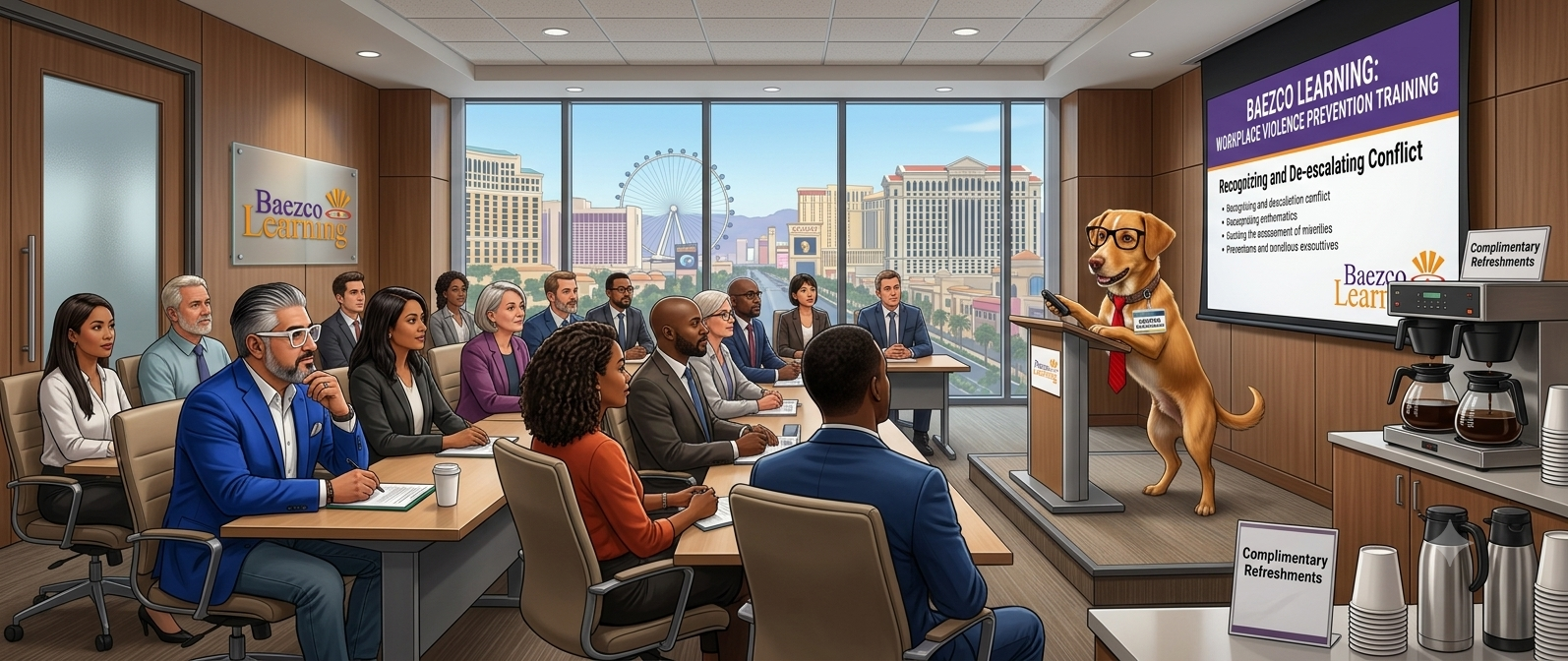
On June 12, Joey McLean, a City of Las Vegas maintenance worker, was shot and killed at his worksite. The coworker charged with killing him, Brysen Kim, has pleaded not guilty and is set for trial early next year.

Months earlier, McLean had written to his HR department. He said he was being stalked and threatened, and that Kim had access to a firearm. His words:

“I am afraid for my life.”

This didn’t come out of nowhere. It was documented. For months. Let me walk you through what actually happened, what HR did, and where they could have done more. The gap between those last two is the whole lesson.

What actually happened

This started in February. Kim filed the first HR complaint against McLean on February 12, raising concerns about truck tailgate operations he saw as possible sabotage, plus harassment and inappropriate messaging. The same day, McLean asked for a transfer.

From there it escalated in both directions. McLean filed his own complaints against Kim. He alleged he was being stalked outside of work, that he was being threatened, and that Kim had a firearm. That’s where the “afraid for my life” line came from.

So this wasn’t one bad actor and one clear victim. Both men were reporting each other. Both were on HR’s radar. For months.

What HR did

Give the city credit for this much. They didn’t ignore it.

They opened investigations. They interviewed nine employees. They placed McLean on paid administrative leave during one investigation. They issued a formal written reprimand. When Kim reached out in June, an HR manager connected him with a behavioral health clinician. A deputy city manager set up a meeting with him. A second disciplinary hearing for McLean was scheduled for June 15.

On paper, that’s a lot of activity. Investigations, interviews, leave, reprimands, referrals, hearings. If you measured HR by how much they documented, they’d pass.

That’s exactly the problem. Documentation isn’t protection.

What HR could have done more

Here’s where it falls apart.

Through all of it, the two men stayed on the same shifts. Supervisors handed them separate tasks so they wouldn’t work side by side. According to the city’s own timeline, they worked the same shift more than two dozen times after the complaints started.

Sit with that. A worker put it in writing that he feared for his life. He named the coworker. He mentioned a gun. And the response was to keep both men reporting to the same yard, the same hours, and count on the daily task list to keep them apart.

Separate tasks are not separation. Not when someone tells you a firearm is in the picture. That situation called for different shifts, different locations, real distance, right then. Not a to-do list.

There were other moves on the table too. McLean asked for a transfer more than once. It was declined. When you’ve got documented threats and a request to get away from the person making them, granting that transfer stops being a scheduling favor. It becomes a safety decision.

None of this needed a crystal ball. Everything HR needed to act on was already sitting in the file. This is employee relations at its highest stakes, and the highest stakes are exactly when a paper trail isn’t enough.

This is a legal duty, not a nice-to-have

A lot of small business owners think workplace safety law is about hard hats and wet floors. It’s bigger than that, and it lands right in the middle of HR compliance.

OSHA’s General Duty Clause requires you to keep your workplace “free from recognized hazards” that are likely to cause death or serious physical harm. Once an employee hands you documented threats, that danger becomes a recognized hazard. Now it’s yours to deal with. The city says it’s waiting on a report from OSHA. That tells you where this is headed.

What this means for your business

You don’t need thousands of employees for this to reach you. If you’ve got a team, you’ve got this risk.

Three things to put in place this month.

Write a real workplace violence policy. Name what counts, how someone reports it, and what happens next.

Train your managers to see the warning signs. Threats. Fixation on one person. Talk of weapons. A pattern that keeps climbing. The people closest to your team need to know what they’re looking at.

Build a complaint process that ends in action, not a folder. When someone reports a real threat, your team should know what to do in the first hour. That includes the authority to separate people fast, before the paperwork is finished.

HR did a lot here. It still wasn’t enough, because none of it put distance between two people who needed to be apart. If a worker handed you that same note tomorrow, would your business move faster? Or would you also end up with a full file and an empty plan?

Want help building a workplace violence policy and a complaint process that actually protects your people? A fractional HR partner can put this in place before you ever need it. Schedule a free 30-minute discovery call with us at baezco.com/contact-us.

Comment

Comment

Your People Are Watching How You Fight For Their Pay

Great leaders don't just manage tasks, they take care of their people. And that starts with the bottom line: their pay.

I shared these thoughts a year ago on why advocating for your team's compensation is a management superpower. If you want to build trust and retain top talent, give this a watch!

Comment

Comment

What the World Cup Is Teaching Us About the Workplace

Something is happening in American streets right now that nobody planned for.

Fans from Morocco and Portugal are sharing drinks outside Dallas sports bars. Argentine supporters in baby blue and white are swapping phone numbers with Dutch fans in orange. Scottish guys in kilts are taking photos with Mexican families in Times Square. Nobody told them to do that. No HR policy required it. No diversity training made it happen.

University of Delaware sport management professor Matthew Robinson put it best: "In a world where there are so many forces trying to tear us apart, sport has the power to unite. Watching fans from around the world embrace America, and Americans embrace different cultures, has been inspiring."

The 2026 World Cup has done something quietly remarkable. It has reminded millions of people that connection between different cultures is not as hard as our news feeds suggest. And if you run a business with a team of people from different backgrounds, there is a leadership lesson hiding in plain sight right now.

The Difference Between Diversity and Inclusion

Most companies talk about diversity. Few actually understand inclusion.

Diversity is who is in the room. Inclusion is whether they feel like they belong there.

The World Cup is not diverse just because 48 nations showed up. It is inclusive because the rules are the same for everyone. The field is the same size. The ball is the same ball. Everyone has a shot. Nobody has to check their identity at the door to participate.

That is exactly what your employees want from you. Not a poster on the break room wall. Not a one-day training in February. They want to know that the same rules apply to them as to everyone else. That their ideas get the same hearing. That their path forward is not blocked by something they cannot control.

If your team is diverse but quiet, that is a warning sign. People who do not feel included stop speaking up. They stop contributing fully. They start looking for a door.

Shared Experience Is the Real Team Builder

Here is what the research actually says about what brings teams together.

Amit Kumar, a University of Delaware marketing professor whose research focuses on the power of shared experiences, put it this way: "If you and I both own the same watch, that's an interesting coincidence. But if we both attended the same World Cup match, we would likely feel a much stronger sense of connection because experiences become part of who we are."

That is not just true at a stadium. It is true in your office.

Your team does not bond over org charts. They bond over shared problems solved together, late nights on a deadline, a win they did not expect, a hard conversation they got through. Those moments create the glue. And the glue is what keeps your best people from leaving when a competitor offers them more money.

As a leader, your job is to create those moments. Not manufacture them with forced fun. Create conditions where real work happens together, where people from different backgrounds have to rely on each other, where the outcome matters to all of them equally.

That is where inclusion stops being a program and starts being a culture.

The Similarities Always Outweigh the Differences

Here is something World Cup fans discovered almost immediately when they landed in their host cities.

The person next to them might speak a different language and support a rival team, but they love the same sport, they want their kids to watch, they are frustrated by the same bad calls, and they celebrate the same way when their team scores. As Kumar's research shows: "The similarities become more important than the differences."

That is true in your business too. Your employees, regardless of where they are from or how they grew up, want the same things. They want to be treated fairly. They want their work to matter. They want to feel safe saying something without getting punished for it. They want to grow.

When leaders focus obsessively on managing differences, they miss the common ground that already exists. Stop leading from the differences. Start leading from the shared goals.

What Leaders Can Actually Do Monday Morning

You do not need a new policy to act on this. You need three habits.

First, create shared goals, not just individual ones. When your team wins or loses together, they invest in each other. When everyone is measured in a silo, they have no reason to.

Second, build in real interaction between people who would not normally work together. Cross-functional projects. Small group conversations that are not about a deliverable. The World Cup did not unite people by putting them in the same stadium. It united them by giving them a reason to be in the same stadium at the same time for the same thing.

Third, remove the barriers that stop people from contributing equally. If your quietest employees are also your newest hires or your employees from different cultural backgrounds, pay attention to that. Your loudest voices are not always your best ideas.

Robinson said the real winners of the 2026 World Cup would not be a country. His answer was one word: "Humanity."

You get to decide what the winner looks like inside your company. And it starts with whether your people feel like they belong on the field.

Want help building a workplace where every employee actually shows up fully? Schedule a free 30-minute discovery call with Ricky Baez at baezco.com/contact-us.

Comment

Comment

Why "I Just Work Better With Men" Is the Most Expensive Thing a Business Owner Can Say

A restaurant owner in Wisconsin just handed every employment lawyer in the country a gift. He sat down, hit record, and explained on camera why he prefers hiring men over women. Then he posted it to YouTube.

You can probably guess how that went.

What actually happened

Tony Angelini owns Angelini's Ristorante in Onalaska, Wisconsin. He posted a 10-minute video where he and three other men laid out why the restaurant would rather staff male servers than female ones, including some flat-out disparaging comments about women and so-called biological factors. When the backlash hit, he doubled down to a local outlet, arguing male servers pay more attention to detail and bring in more revenue.

Now there's a protest planned and people calling for a boycott. But the boycott is the small problem. The big one is that he said the quiet part into a microphone.

The law does not care about your reasons

Here's what trips up business owners. They think discrimination has to be hateful to be illegal. It doesn't.

Title VII of the Civil Rights Act bans employers from treating people differently in hiring because of their sex. That's the whole rule. It doesn't matter if you think men are more "professional." It doesn't matter if you swear your male staff make you more money. The reason you give is not a defense. It's the evidence.

Wisconsin's own labor agency said the same thing about this case. Letting sex drive an employment decision is unlawful, and that covers hiring, pay, assignments, promotions, and firing. Florida and federal rules work the same way. A "preference" based on gender is not a preference. It's a violation with a paper trail.

This is not a slap on the wrist

You might be thinking this is a small-town story about one guy with a camera. The price tag says otherwise.

In May 2026, a national trucking company agreed to pay $5.5 million to settle EEOC claims that it refused to hire qualified female drivers because of their sex. A month earlier, a waste company paid $200,000 after a manager told a female applicant that women drivers had not worked out before, then hired a less-qualified man.

Read that second one again. A manager said one sentence out loud. That sentence cost the company $200,000. Angelini put ten minutes of it on the internet.

You are probably doing a quieter version of this

Most owners would never record that video. But the same thinking shows up in small businesses every day, just wearing a nicer outfit.

It sounds like "I need someone who fits the culture here." It sounds like "the guys on this crew are pretty rough, I'm not sure a woman would be comfortable." It sounds like writing a job ad that pictures a "him" before anyone applies. None of that gets posted to YouTube. All of it builds the same case.

This is where employee relations and real HR compliance earn their keep. Plenty of owners bring in fractional HR support for exactly this reason: to catch the thinking before it becomes a decision, and the decision before it becomes a lawsuit.

The fix is boring, and that's the point

You don't need a legal team. You need a process.

Write down the actual skills the job requires, then hire against that list and nothing else. Make sure two people review every hiring decision so no single bias runs the show. Keep notes on why you picked who you picked, because "he was the most qualified" only protects you if you can show it. And train whoever runs your interviews on what they cannot say in the room.

That's it. That's the whole defense. A clear standard, applied the same way to everybody, written down.

The restaurant owner had a microphone and no filter. Most businesses have no microphone and no process. Both end up in the same place.

So what would your last five hiring decisions look like if a stranger read your notes out loud?

Want help making sure your hiring holds up before it costs you? Visit baezco.com to learn how Ricky's fractional HR support works for businesses like yours.

Comment

Comment

If Your Employees Are Lying About Being Sick, Your Culture Is the Problem

One of your employees calls out sick Monday morning. Stomach bug. You say feel better and move on.

But according to a July 2025 survey of 1,000 U.S. workers, there is a good chance that employee was not sick at all. They needed a mental health day. They just did not trust you enough to say so.

That is not a small problem. That is a leadership problem.

The Numbers Do Not Lie, Even If Your Employees Do

A recent report from TEAM Software found that 42% of U.S. workers have exaggerated physical symptoms to take time off for their mental health. Among Gen Z workers, that number jumps to two out of three. Another 19% simply disguised their mental health day as a sick day entirely.

Here is the part that should bother every business owner: only 10% of workers who took a mental health day felt comfortable being honest with their employer about it and received a positive response.

Think about that. Nine out of ten employees who needed a mental health day either lied about it, said nothing, or told the truth and felt dismissed.

That is not a mental health problem. That is a culture problem. And you own the culture.

Why Employees Do Not Feel Safe Telling the Truth

The 2025 NAMI Workplace Mental Health Poll surveyed more than 2,300 full-time U.S. workers. Forty-two percent said they worry their career would be negatively impacted if they talked about mental health concerns at work. Nearly half said they would worry about being judged.

Only 13% told their manager their mental health was suffering because of work demands.

That means the other 87% stayed quiet. They showed up, dragged themselves through the day, and either performed poorly or eventually left. The same NAMI data found that one in four employees considered quitting due to mental health concerns in the past year. That is turnover you could have prevented with a conversation.

What Psychological Safety Actually Means

There is a phrase that gets thrown around a lot in HR circles: psychological safety. Strip the jargon away and it means this. Your employees feel safe enough to tell you the truth without fearing what happens next.

Research from McKinsey found that only 26% of leaders demonstrate behaviors that create psychological safety for their teams. That means three out of four leaders think they have an open culture while their employees are quietly suffering and covering it up with fake symptoms.

Psychological safety does not mean you become a therapist. It means you set the standard that a mental health day is as valid as a fever. When you model that, your team follows. When you do not, they lie.

What You Can Do Starting This Week

You do not need a full HR department to fix this. You need to change one or two behaviors.

First, normalize the conversation. At your next team meeting, say it out loud: "If you need a mental health day, take it. You do not have to tell me why." That one sentence does more than any wellness program you could buy.

Second, stop requiring details. When an employee calls out, accept the absence without pressing them to prove they are sick. Fear of not being believed is one of the main reasons employees lie in the first place.

Third, check how your managers respond. If a team lead rolls their eyes or passive-aggressively reassigns work when someone calls out, that behavior poisons the whole team. Culture is set at the manager level, not the policy level.

Fourth, look at your data. High absenteeism, high turnover, and low engagement are usually symptoms of a culture where people do not feel safe. Fix the environment, and the numbers change.

The NAMI data backs this up. In workplaces that offer mental health training and support, only 21% of employees report that their productivity suffered because of their mental health. In workplaces without that support, the number climbs to 38%. That is nearly double. The difference is leadership.

Your Team Is Watching What You Model

Your employees are not going to believe mental health days are acceptable just because you add a line to an employee handbook. They are going to believe it when they see you take one. When they see a manager take one. When nobody gets punished for it.

You set the tone every single day. The question is whether you are creating a culture where people can tell the truth, or one where lying feels safer.

Want help building an employee relations strategy where your people actually show up and stay? Schedule a free 30-minute discovery call with Ricky Baez at baezco.com/contact-us.

Comment

Comment

They Fired Her While She Was on Maternity Leave. Now the EEOC Is Involved!

A manager at a restaurant tells her employer she's pregnant. The owners tell her they're uncomfortable with her working the floor while visibly pregnant. They pressure her to take leave earlier than she planned. She goes six weeks before her due date, even though she was ready and able to keep working. Then she asks for two extra weeks of leave after the baby comes.

They fire her. And hire a man to take her place.

That is not a hypothetical. That is the core of a lawsuit the EEOC filed against Proper 21, a restaurant chain in Washington, D.C. The EEOC announced the suit on June 1, 2026. If you run a business with employees, you need to read this before it becomes your story.

What the Law Actually Says

The Pregnancy Discrimination Act amended Title VII of the Civil Rights Act of 1964. It has been federal law since 1978. Under that law, employers cannot fire, demote, or push out an employee because she is pregnant, on maternity leave, or because she recently gave birth.

The law applies to employers with 15 or more employees.

That threshold matters. Because the second law most business owners think of here is the Family and Medical Leave Act, which applies to employers with 50 or more employees. A lot of small business owners hear they don't hit the FMLA threshold and assume they're clear. They're not. The Pregnancy Discrimination Act kicks in at 15 employees. If you're above that number, these rules apply to you.

And since June 27, 2023, the Pregnant Workers Fairness Act adds another layer. Employers with 15 or more employees are now required to provide reasonable accommodations for limitations related to pregnancy, childbirth, or related medical conditions, unless doing so would create an undue hardship. The law does not require you to grant every request. It does require you to take those requests seriously and respond in good faith.

Where the Proper 21 Case Goes Wrong

In the EEOC's lawsuit against Proper 21, the owners told the manager they weren't comfortable with her working the restaurant floor while several months pregnant. That conversation is now an exhibit.

Under the Pregnancy Discrimination Act, you cannot remove a pregnant employee from her job or pressure her into early leave because you believe working poses a risk to her or her pregnancy. That decision belongs to her and her doctor. Not you. The moment you start steering her toward the exit because of her pregnancy, you have crossed the legal line, regardless of your motivation.

Good intentions do not resolve a discrimination claim. If pregnancy was a motivating factor in your employment decision, that is a violation. The employer's discomfort does not change that. Concern for the employee's wellbeing does not change that. A genuine belief that you were doing the right thing does not change that. Under the law, pregnancy cannot be the reason.

What This Looks Like in a Small Business

These situations are common. A manager tells you she's pregnant. You start thinking about coverage. You wonder how long she plans to work. You ask more questions than you normally would. You suggest maybe she should start her leave a little early, just to be safe.

Every one of those steps is a problem. And it is not just about what you say. It is about the pattern. If an employee's pregnancy changed how you treated her, that pattern becomes evidence.

The comparison test is the clearest guide the EEOC gives employers: would you have made this decision if the employee were not pregnant? If the answer is no, stop. If you have already acted, call an HR professional before the situation escalates.

Three Things to Get Right Before This Becomes Your Problem

You do not need a legal team to handle this correctly. You need clear policies and the discipline to follow them consistently.

Write down exactly how your business handles pregnancy leave requests before someone asks. A policy that does not exist on paper cannot protect you.

Train every manager who has direct reports. The words people say in hallway conversations become the evidence in EEOC complaints. If your managers do not know what they cannot say, they will say it.

Apply the same standard to every employee. If a pregnant employee asks for an accommodation, compare that request to how you handle similar requests from other employees with temporary physical limitations. The PDA requires equal treatment, not special treatment.

If you are running a business with 15 to 500 employees and you do not have a written pregnancy accommodation and leave policy, you are taking on risk you do not have to carry. That is exactly what a fractional HR consultant for small business is built for.

Want help making sure your business is on the right side of this? Schedule a free 30-minute discovery call with Ricky Baez at baezco.com/contact-us.

Comment

Comment

AI Is Now the Number One HR Risk for Small Business! Do you Have a Plan?

You turned on the AI tool because it was supposed to save time. Maybe it screens resumes. Maybe it handles scheduling. Maybe it tracks performance. You set it up, it ran, and you moved on. Here's the problem: that tool is making decisions about your people right now, and most business owners have no idea what it's actually doing.

That's not just a tech problem. It's a legal one.

AI Just Became the Biggest HR Compliance Risk in the Country

In May 2026, law firm Littler Mendelson released its 14th Annual Employer Survey, drawing on responses from more than 300 C-suite executives, in-house lawyers, and HR professionals. The headline finding: 84% of employers expect AI-related policy and regulatory changes to impact their business in the next year. That number doubled from 42% just one year ago.

AI knocked immigration and DEI off the top spot. That tells you how fast this is moving.

At the same time, 54% of those same employers said they're already using AI specifically for HR functions. Hiring, performance management, scheduling, you name it. The tools are in use. The guardrails are not.

Using the Tool Doesn't Mean You're Off the Hook

Here's where small business owners get caught off guard. You buy an HR software platform. The vendor says it uses AI to streamline hiring or manage performance. You take their word for it and move on.

What nobody tells you is that outsourcing the decision doesn't outsource the liability.

The EEOC has made clear that employers remain fully responsible under Title VII when AI-driven tools produce discriminatory outcomes. If an algorithm screens out candidates in a way that negatively impacts a protected class — by age, race, disability, gender — the liability attaches to you, not just the vendor. It doesn't matter that you didn't write the code.

A case already moving through federal courts, Mobley v. Workday, is testing exactly this theory. The court allowed the case to proceed on the argument that an HR technology vendor can be treated as an "agent" performing hiring functions on behalf of employers — which means both the platform and the businesses using it could face liability. That case is a signal. Courts are paying attention to what these tools do.

The Scale Problem Small Businesses Underestimate

Here's what makes AI discrimination risk different from a bad hiring decision made by a manager. A human makes a biased call, it affects one candidate. A biased algorithm makes that same call automatically, at scale, across every single applicant who comes through your system.

A bad algorithm doesn't cost you one complaint. It could cost you a class action.

This is especially true for fractional HR and HR outsourcing clients who rely on shared platforms without knowing how those platforms make decisions. If you're a business with 20 to 200 employees and your hiring or HR software uses any kind of automated scoring, filtering, or ranking, this applies to you.

Most Employers Still Don't Have a Written AI Policy

The Littler survey also found that while many organizations are moving to restrict what information employees can enter into AI tools (54%) or are building formal review processes (55%), a significant number are still playing catch-up on governance. Employers are adopting AI faster than they're building the policies to manage it.

That gap is where lawsuits live.

And at the state level, the rules are tightening fast. Colorado's AI Act takes effect June 30, 2026, requiring employers using high-risk AI tools in employment decisions to conduct bias testing, provide transparency notices to candidates and employees, and ensure that no final employment decision is fully automated. Other states are watching and moving in the same direction.

Three Things to Do Before You Get Caught Off Guard

You don't need a legal team or a compliance department to start getting this right. You need to take three steps this week:

  • Find out exactly what your HR software is doing. Call your vendor. Ask directly: does this platform use AI to screen, rank, score, or filter candidates or employees? Get it in writing. If they can't explain it clearly, that's a red flag.

  • Put a human on every final decision. No hiring decision, no termination, no disciplinary action should be executed purely by an algorithm. A real person needs to review and approve. Document that review.

  • Write down your AI use policy. Even a one-page document that describes what tools you use, what decisions they inform, and what human oversight exists puts you in a far better position than having nothing on paper at all.

AI in the workplace isn't going away. But neither is your obligation to manage it. The businesses that treat this as a compliance issue now are the ones that won't be explaining themselves to a lawyer later.

What AI tools are running in your HR process right now — and do you actually know what they're deciding?

Want help getting your AI use policies in place before they become a liability? Schedule a free 30-minute discovery call with Ricky Baez at baezco.com/contact-us.

Comment

Comment

You're in Florida. Pay Transparency Laws Still Apply to You.

Florida has no statewide pay transparency law. A lot of business owners stop reading right there and figure they're off the hook. They're not.

The Map Has Changed

As of 2026, 18 states plus Washington D.C. have active pay transparency laws on the books. That list includes Colorado, New York, California, and Illinois. These laws generally require employers to disclose salary ranges in job postings, during interviews, or upon an applicant's request. Some go further and require disclosure of bonuses and full compensation packages.

If you post a job on Indeed, LinkedIn, or any national job board and a candidate in Colorado or New York applies for it, you may already be required to include a salary range in that posting. Your company doesn't have to be headquartered in those states. The candidate's location can trigger the requirement.

Remote Hiring Makes This More Complicated

This is where Florida business owners get tripped up. If your job posting could reasonably attract applicants in a pay transparency state, and many remote roles can, some state laws require you to disclose pay ranges regardless of where your company sits. California and New York are two of the strictest. If you're hiring for a remote role and posting it publicly, you need to know where that posting is visible and what laws apply.

The safest approach is to include a salary range on any remote job posting you publish nationally. It protects you in the states that require it, and it helps you attract candidates faster by filtering out people whose salary expectations don't match yours.

What Pay Transparency Actually Requires

The specifics vary by state, but the most common requirements include:

Including a salary range or pay scale in job postings. Some states require this for all postings. Others only kick in when an applicant asks.

Disclosing pay ranges to existing employees when they are being considered for promotions or transfers in certain states.

Removing salary history from the hiring conversation. A growing number of states ban employers from asking candidates what they made at their last job and from using that information to set starting pay.

What You Should Do Right Now

Pull up your last three job postings. Did any of them go out on a national job board? Were they open to remote candidates? If the answer to either question is yes, check which states those postings could have reached and whether any of them have disclosure requirements.

If you have employees working remotely in other states, take 30 minutes to confirm what pay transparency laws apply where those employees are located. This is not a long compliance project. It's a quick audit that most business owners haven't done.

Florida may not require you to post salary ranges today. But the law in the state where your next hire works might. And compliance that hinges on where you happen to be headquartered is not a strategy worth betting on.

Are your job postings ready for the states your candidates are actually living in?

Want help making sure your job postings and hiring process are compliant no matter where your candidates are? Schedule a free 30-minute discovery call with Ricky Baez at baezco.com/contact-us.

Comment

Comment

Your Employees Are Struggling. Your Business Is Paying for It.

One in three employees says their mental health hurt their job performance last year. Nearly half of American workers have voluntarily left a job because of it. If you think your team is the exception, you need to look at the numbers more closely.

The Data Is Not Good

According to research compiled by Growtherapy, 34% of employees reported that their productivity suffered in 2024 because of their mental health. 48% of U.S. employees have left a job for mental health reasons, and two-thirds of those departures were voluntary. That's not people quitting because they found a better offer. That's people walking out because the job was breaking them down.

Small businesses feel this more than large ones. According to Paychex's 2026 Priorities for Business Leaders report, 52% of HR workers in businesses with fewer than 20 employees report moderate levels of burnout. When your team is small, one person's burnout is everyone's problem.

What This Costs You

Gallup reported that reduced employee well-being drained $438 billion in lost productivity globally in 2024. That's not a number that lives in a spreadsheet at a Fortune 500 company. It shows up in missed deadlines, dropped balls, sick days, and the slow fade of someone who has mentally already left before they physically walk out.

Here's the number that should stop you cold: in workplaces that offer mental health resources, only 21% of employees report that their productivity has suffered. In workplaces without those resources, that number jumps to 38%. The difference is nearly double. That's not a wellness program selling you something. That's your bottom line.

What Small Businesses Can Actually Do

You don't need a full benefits overhaul or a wellness budget with six figures behind it. Here are three things that cost you almost nothing.

First, train your managers to notice. Most mental health struggles at work don't announce themselves. They show up as missed deadlines, increased irritability, or someone going quiet who used to speak up. Your managers are your early warning system. Give them language and permission to check in.

Second, make your EAP visible. If your health insurance includes an Employee Assistance Program, your employees probably don't know how to use it. Research from the National Alliance on Mental Illness found that only 53% of employees know how to access mental health care through their employer. Send a clear, plain-language reminder. Once a quarter is enough.

Third, protect recovery time. No-meeting mornings, protected lunch breaks, and a clear policy that after-hours messages don't require after-hours responses are free. They signal that you take this seriously without spending a dollar.

This Is a Business Problem, Not Just a People Problem

The instinct for a lot of business owners is to treat mental health as soft or optional. The data says otherwise. You're already paying for employee mental health struggles through turnover, absenteeism, and people who show up but can't perform. The only question is whether you're paying reactively or doing something about it on the front end.

What's one thing you could do this week to make it easier for your team to ask for help?

Want help building a mental health strategy that works for your team and your budget? Schedule a free 30-minute discovery call with Ricky Baez at baezco.com/contact-us.

Comment

Comment

Florida's $15 Minimum Wage Is 127 Days Away. Is Your Payroll Ready?

Florida's minimum wage hits $15 per hour on September 30, 2026. That date is closer than it looks. If you run a business in Florida and haven't touched your payroll yet, this post is for you.

This Is the Last Scheduled Increase. But It's Not the Last One Ever.

Florida voters approved this increase back in 2020 through Amendment 2 to the state constitution. The wage has been climbing $1 per year since 2021. September 30 is the final step in that schedule. After that, the Florida Department of Commerce will adjust the wage annually for inflation, with changes announced by October 15 and taking effect on January 1 of the following year. So while $15 is the finish line for the amendment, it is not the end of wage increases. Plan accordingly.

The Rate Applies to Every Florida Employer. No Size Exceptions.

This is the part that catches small business owners off guard. Florida law does not exempt small businesses from the state minimum wage. It doesn't matter if you have two employees or two hundred. If your workers are covered by the Fair Labor Standards Act, you're required to pay the new rate on September 30. Not October 1. September 30.

Tipped Employees Have a Different Number. And It Matters.

If you run a restaurant, bar, or any business with tipped employees, the rate going up on September 30 is $11.98 per hour in direct cash wages. That's up from $10.98. The tip credit in Florida is $3.02 per hour, which is a fixed amount and does not change with the minimum wage increase. Here's the part most owners miss: if your employee's tips don't bring their total hourly pay up to the full $15 minimum, you're legally required to cover the gap. No exceptions and no workarounds. And before you apply the tip credit at all, you are required to notify your tipped employees of their direct cash wage, the tip credit amount, and that they keep all their tips outside of valid tip pooling arrangements. Skip that notice and you lose the right to claim the tip credit entirely under federal law.

Three Things You Need to Do Before September 30

You don't need an HR department to get ready for this. You need three things on your calendar.

First, update your payroll system. If you use a payroll platform, check whether it will apply the new rate automatically or whether you have to trigger the change manually. Do not assume it happens on its own.

Second, get your updated minimum wage poster up before September 30. Florida law requires you to post the current minimum wage in a location all employees can see. The Florida Department of Commerce typically releases the updated poster in November or December before the rate change. That means the $15 poster should already be available. Get it posted before the deadline, not on it.

Third, notify your tipped employees in writing before the rate changes. Spell out their new direct cash wage, the tip credit amount, and their rights around tips. Keep a copy. You will want it if a question ever comes up.

Do Not Wait Until the Last Week

Payroll changes that go wrong cost real money. An underpayment discovered after the fact can mean back wages, penalties, and a complaint filed with the Florida Department of Commerce. None of those are how you want to spend your fall.

Pull up your payroll settings this week. Confirm the new rates are loaded and ready. If your tipped wage calculations are handled manually, double-check your math now.

September 30 is a hard deadline. Your employees will know the rate changed. Make sure your payroll does too.

Want help navigating Florida's minimum wage changes in your business? Schedule a free 30-minute discovery call with Ricky Baez at baezco.com/contact-us.

Comment

Comment

8 Compelling Reasons to Pursue a Career as an HR Manager

The heartbeat of every successful organization is its people. It’s where human resources (HR) shines, transitioning from a primarily administrative function to a strategic partnership at the core of business success. In this article, we'll explore why being an HR manager is more than just a career choice - it's a call for those who want to make a real difference in the workplace and grow their organization.

Impact on Organizational Culture

HR managers are the architects of their company's culture. They lay the foundation for a work environment that fosters respect, diversity, and inclusion. Imagine being the primary reason your workplace is considered a great place to work, where every employee feels valued, heard, and motivated. The satisfaction derived from nurturing such an environment is unparalleled, making it one of the most fulfilling aspects of being an HR manager.

A Central Role in Strategic Decision Making

Gone are the days when HR was seen as a back-office function. Today, HR managers sit at the strategic planning table, aligning human resources with overall business objectives. From talent management to succession planning, HR's insights help steer the company toward its long-term goals, ensuring the right people are in place to achieve them. This strategic involvement allows HR managers to contribute directly to the organization's success, offering a sense of achievement and purpose.

Opportunities for Personal and Professional Growth

An HR manager's role is incredibly diverse, offering exposure to various aspects of the business. The job is a continuous learning journey, from recruiting and onboarding to developing training programs and maintaining compliance with labor laws. This variety keeps the day-to-day work interesting and contributes to substantial personal and professional growth.

The Reward of Supporting Employee Development

At the heart of HR is the opportunity to support and witness the growth of employees. HR managers play an important role in designing and implementing training programs, performance management systems, and career paths that help individuals achieve their potential. There's a unique joy in seeing an employee flourish, knowing you had a hand in their development.

Variety in Daily Tasks

If you're someone who thrives on variety, a career in HR promises that no two days will be the same. A combination of strategic planning, problem-solving, and people management keeps the work engaging and challenging. Whether mediating conflicts, planning a company-wide event, or developing policies, HR managers enjoy a dynamic work environment. For more insight on the daily responsibilities, check out these sample HR manager job descriptions.

Competitive Compensation and Benefits

Not only is the role of an HR manager rewarding in terms of job satisfaction, but it also offers competitive compensation packages. With attractive salaries, bonuses, and benefits, the financial rewards of a career in HR management are compelling. As organizations increasingly recognize the value of strategic HR management, the demand for skilled HR professionals continues to rise, reflecting positively on compensation trends.

Making a Real Difference

One of the most gratifying aspects of being an HR manager is the ability to make a real difference. Whether it's through implementing initiatives that improve work-life balance, fostering a culture of diversity and inclusion, or simply being there for employees during tough times, the impact of a dedicated manager is profound and far-reaching.

High Demand for Skilled HR Professionals

The demand for skilled HR professionals is on the rise, with organizations across various industries recognizing the critical role HR plays in achieving business success. This growing demand means more opportunities for HR managers to find challenging and rewarding positions that match their skills and interests.

Conclusion

Becoming an HR manager offers a unique blend of challenges and rewards, making it an attractive career path for those passionate about people, culture, and strategic business impact. If you're inspired by the prospect of making a tangible difference in the workplace and contributing to organizational success, a career in HR management might just be your calling. As the corporate world continues to evolve, the need for strategic, compassionate, and skilled HR professionals has never been greater. Are you ready to step up to the challenge?


For those interested in exploring this dynamic career path further, consider pursuing HR-related courses and certifications and joining professional organizations to expand your knowledge and network. The journey to becoming an HR manager is one of continuous learning and growth, with endless opportunities to make a lasting impact on the world of work.

With over two decades of HR expertise under his belt, Ricky has made a name for himself as a published professional who knows how to strategically align HR competencies with business goals. But what sets him apart is his refreshing, down-to-earth approach that resonates with everyone from executives to front-line staff. Ricky understands that the "H" in HR is more than just a letter—it's the heart of any successful organization. By forging strong partnerships and creating a fun, vibrant learning environment, he helps companies minimize legal risk while maximizing employee engagement and satisfaction. As a proud four-year veteran of the United States Marine Corps, Ricky knows a thing or two about leadership and teamwork. He leverages that experience to guide business leaders from "here" to "there" using talent management, training and development, and leadership coaching strategies that deliver real, measurable results. But Ricky isn't just a seasoned practitioner—he's also an accomplished educator. As a faculty member for the Master of Human Resources program at Rollins College in Winter Park, FL, he shares his passion for HR with the next generation of professionals.

Comment

Comment

The Heart of Leadership: Embracing Emotional Intelligence

Siri, Google Assistant, Alexa, ChatGPT, and Bard; all different aspects of Artificial intelligence that are getting smarter AND efficient on a daily basis. A.I. and robotics may captivate the corporate world, but there's one element of leadership that's irreplaceable: Emotional Intelligence. In the world of effective leadership, emotional intelligence is the hidden gem. It's not just a trait, it's an asset. How is this asset cultivated? It’s not as hard and one would think.

The Pulse of Emotional Intelligence

Emotional intelligence is a tricky concept to grasp in leadership, so let's first decode it. Having emotional intelligence means knowing how to recognize, comprehend, utilize, and regulate your own and others' emotions. Self-awareness, motivation, self-regulation, and social skills are all involved. The glue that holds it all together is as simple as mastering the art of the human touch; especially in a digital world.

The E.I. Effect: Why It Matters in Leadership

Fostering a Collaborative Work Environment

Employees' emotions are easily understood by leaders with who regularly practice emotional intelligence. It's easy for them to navigate team dynamics and foster an open environment for communication and collaboration. Trust is built when E.I. leaders acknowledge and validate team members' feelings.

Mitigating Conflicts

Like it or not, there are always going to be conflicts at work. It's all about how they're handled. It's easier for an emotionally intelligent leader to identify underlying tension before it escalates, approach disagreements with an open mind, and make mutually beneficial decisions. An effective leader doesn't shy away from tough conversations, but handles them tactfully, keeping the workplace harmonious.

Driving Employee Engagement and Retention

Empathy and genuine care bolster employee morale and engagement when leaders show them. This leads to a lower turnover rate because employees are more committed. Recognition and celebration of individual strengths and accomplishments further strengthens this bond.

Nurturing the Seed of E.I. in Leadership

There's no such thing as an inborn emotional intelligence; it's a skill that can be developed and nurtured. Here's how:

Self-awareness and Reflection

Emotional intelligence starts here. A leader's self-awareness can be enhanced through regular introspection, getting feedback, and improving.

Empathy

You can't just be empathic if you don't understand how someone feels. We need to put ourselves in their shoes. Listening actively, where you're really present in the conversation, can enhance empathy.

Effective Communication

It's all about communication. It's important for an emotionally intelligent leader to convey their thoughts and feedback in a constructive, non-confrontational way - Make difficult conversation easy to participate in.

Continuous Learning

You can enhance emotional intelligence with all sorts of resources, from books to seminars, even youtube videos. In order to get better at this skill, leaders should keep learning. With so many resources out there today, there is no excuse NOT to have a continuous learning plan.

The Road Ahead

The role of emotional intelligence in leadership is more than just adopting a 'soft skill'. It's about realizing how powerful it can be, so long as you use it properly. Since personal and professional lives are blurring, especially in a world where remote work and virtual collaboration are the norm, E.I. has never been so important.

The core of leadership is connections. Our vision is to build bridges between diverse team members, align individual aspirations with organizational goals, and create a shared vision. Leaders need emotional intelligence to steer their ship with both their minds and hearts.

In summary, machines and algorithms will inevitably influence the future, but emotional intelligence will always be the heartbeat of effective leadership. A leader who wants to create an engaged, productive, and harmonious workplace needs to embrace this truth.

With over two decades of HR expertise under his belt, Ricky has made a name for himself as a published professional who knows how to strategically align HR competencies with business goals. But what sets him apart is his refreshing, down-to-earth approach that resonates with everyone from executives to front-line staff. Ricky understands that the "H" in HR is more than just a letter—it's the heart of any successful organization. By forging strong partnerships and creating a fun, vibrant learning environment, he helps companies minimize legal risk while maximizing employee engagement and satisfaction. As a proud four-year veteran of the United States Marine Corps, Ricky knows a thing or two about leadership and teamwork. He leverages that experience to guide business leaders from "here" to "there" using talent management, training and development, and leadership coaching strategies that deliver real, measurable results. But Ricky isn't just a seasoned practitioner—he's also an accomplished educator. As a faculty member for the Master of Human Resources program at Rollins College in Winter Park, FL, he shares his passion for HR with the next generation of professionals.

Comment

Comment

Best Practices in Employee Relations: Aligning People and Goals for Business Success

The heart of any successful organization is employee relations. I can't stress enough how important it is for small and medium-sized businesses to keep employees happy and productive. Our approach to this crucial aspect of HR focuses on strategic alignment, common-sense solutions, and people-oriented perspectives. To promote robust employee relations, we're going to look at these best practices that you can use in your own company.

Clear Communication

A great employee relationship starts with clear, transparent, and regular communication. It keeps management and employees in the loop so they can share expectations, changes, and updates. It's important that the message you're conveying is both accurate and easy to comprehend, regardless of your level. You can get your team more engaged and cohesive by holding regular town halls, departmental meetings, and using digital communication tools.

Respect and Recognition

Respect is a powerful tool in cultivating positive relationships within a workplace. The better your relationship with your employees, the more you acknowledge their contributions, value their inputs, and appreciate their unique qualities. In addition, rewarding an employee for their hard work and accomplishments boosts motivation, morale, and loyalty. We celebrate employee success at Baezco Learning with regular employee appreciation events and recognition programs.

Active Engagement

Employee engagement is not just about showing up to work and carrying out tasks. We want our employees to be invested in the company's vision, mission, and goals, and contribute not just their skills but also their ideas. You can boost engagement by doing regular team-building activities that promote camaraderie, collaborating on projects that foster a sense of shared purpose, and taking part in professional development opportunities.

Implementing Effective Onboarding Strategies

An employee's perception of the company can be made or broken during the onboarding phase. It's a good idea to plan your onboarding program carefully to set positive employee relations right from the start. There have to be clear job descriptions, performance expectations, and advancement opportunities along with a thorough introduction to the company culture, values, and mission. It's easier for companies to foster employee loyalty and engagement if they make them feel welcome and valued.

Developing a Comprehensive Employee Handbook

The employee handbook helps employees understand company policies, codes of conduct, and benefits. You can minimize misunderstandings and disputes with a comprehensive, clear, and accessible handbook. Employees have a clear understanding of company policies and procedures, which makes the workplace more transparent and trustworthy.

Understanding Employment and Labor Law

Ethics in business start with compliance with labor and employment laws. This shows respect for employees' rights, prevents legal disputes, and protects both the company and its employees. Maintaining compliance and understanding of these laws can be achieved with regular training sessions and updates.

Investing in Leadership Development

Maintaining healthy employee relations requires great leaders. The right leadership development program can make you a better manager, inspire your people, and keep them around. Communicating effectively, resolving conflicts, and motivating team members will foster a positive working environment and enhance employee relations.

Effective Retention Strategies

You can keep your employees loyal and happy with retention strategies that go beyond competitive pay. The incentives could be performance-based, career progression paths, work-life balance, and a positive work environment. Employers can reduce turnover and foster a sense of belonging by acknowledging employees' contributions and giving them opportunities to grow.

Human connections and relationships are what we prioritize at Baezco Learning. Using a common-sense approach, we emphasize two-way communication, mutual respect, and aligning HR competencies with business goals. Our goal is to help our clients create a vibrant, productive, and harmonious work environment.

With over two decades of HR expertise under his belt, Ricky has made a name for himself as a published professional who knows how to strategically align HR competencies with business goals. But what sets him apart is his refreshing, down-to-earth approach that resonates with everyone from executives to front-line staff. Ricky understands that the "H" in HR is more than just a letter—it's the heart of any successful organization. By forging strong partnerships and creating a fun, vibrant learning environment, he helps companies minimize legal risk while maximizing employee engagement and satisfaction. As a proud four-year veteran of the United States Marine Corps, Ricky knows a thing or two about leadership and teamwork. He leverages that experience to guide business leaders from "here" to "there" using talent management, training and development, and leadership coaching strategies that deliver real, measurable results. But Ricky isn't just a seasoned practitioner—he's also an accomplished educator. As a faculty member for the Master of Human Resources program at Rollins College in Winter Park, FL, he shares his passion for HR with the next generation of professionals.

Comment

Comment

Getting Noticed in a Crowded Field: Mastering Self-Marketing

You can't visit any news outlet today without seeing something about layoffs. More people looking for work means fewer chances for you to get the interview. Applying for a job isn't good enough anymore. To stand out among qualified candidates in today's competitive job market, you've got to go the extra mile. You need to know how to market yourself if you're going to succeed in a saturated market. Get employers' attention in a crowded job market with these tips.

Create a strong brand

Successful self-marketing starts with a strong personal brand. Create a unique value proposition and communicate it across your resume, cover letter, online profiles, and interviews. Position yourself as a solution to employers' needs by showcasing your skills, experiences, and achievements that match your target industry.

Customize Your Application Materials

Make sure you customize your application materials for every job you apply for. Get to know the company, understand their values and requirements, and show them how your skills and experiences match. Put together a compelling resume and cover letter that highlights your relevant achievements, projects, and qualifications.

Leverage Your Online Presence

Standing out can be made or broken by your online presence. Optimize your LinkedIn profile to show off your professional achievements. Demonstrate your expertise and work by creating an online portfolio. THIS is the time to toot your own horn! Don’t be shy about it. Share valuable insights and join industry-specific communities to position yourself as a thought leader.

Network, Network, Network

Networking is still one of the best ways to market yourself. Get involved in industry events, join professional associations, and make connections online. Make genuine connections with people in your field and don't be afraid to ask for informational interviews. In a saturated market, networking can lead to job opportunities and referrals. Do not underestimate its effectiveness.

Showcase Continuous Learning

Make sure you're always learning and growing. Get relevant certifications, take online courses, or attend workshops to expand your skills. Show off these accomplishments on your resume and during interviews to show your willingness to stay on top of changes.

Be Proactive and Persistent

Take charge of your job search; don't wait for opportunities to come to you. You can start by researching target companies, reaching out to hiring managers or professionals at those companies, and telling them you're interested in their work. Don't forget to follow up after interviews or networking meetings. A proactive approach and persistence can set you apart from other candidates who are more passive.

Demonstrate Cultural Fit

Aside from technical skills, employers want candidates who fit their culture. Get to know the organization's values, mission, and work environment. Show off your teamwork, adaptability, and ability to contribute positively to the company's culture during interviews. Don't be afraid to show off your passion for the industry.

At the end of the day taking deliberate steps to market yourself effectively helps you stand out in a crowded field. It's easy to stand out in a competitive job market if you make your personal brand stand out,

customize your application materials, leverage your online presence, network smartly, show off your continuous learning, be proactive, and emphasize your cultural fit.

Always remember that self-marketing is a process. Continue to refine your personal brand, adapt your strategies, and keep pursuing opportunities. You can successfully navigate the saturated job market with determination, self-marketing, and a unique value proposition.

With over two decades of HR expertise under his belt, Ricky has made a name for himself as a published professional who knows how to strategically align HR competencies with business goals. But what sets him apart is his refreshing, down-to-earth approach that resonates with everyone from executives to front-line staff. Ricky understands that the "H" in HR is more than just a letter—it's the heart of any successful organization. By forging strong partnerships and creating a fun, vibrant learning environment, he helps companies minimize legal risk while maximizing employee engagement and satisfaction. As a proud four- year veteran of the United States Marine Corps, Ricky knows a thing or two about leadership and teamwork. He leverages that experience to guide business leaders from "here" to "there" using talent management, training and development, and leadership coaching strategies that deliver real, measurable results. But Ricky isn't just a seasoned practitioner— he's also an accomplished educator. As a faculty member for the Master of Human Resources program at Rollins College in Winter Park, FL, he shares his passion for HR with the next generation of professionals.

Comment

Comment

Building Strong Relationships: Strategies to Avoid Unions

Today, long-term success depends on keeping positive relationships with employees. Many businesses aim to keep an open line of communication with their workers instead of relying on unions for collective representation. Companies can reduce the likelihood of unionization by proactively addressing employees' concerns, treating them fairly, and creating a positive work environment. Here's a look at key strategies businesses can use to avoid unions and promote harmonious employee-employer relations.

Open Lines: Communication needs to be open and transparent. Engage your employees regularly, listen to their feedback, and address their concerns quickly. Employees can voice their opinions and feel heard by creating two-way channels of communication, such as suggestion boxes and team meetings.

Benefits and compensation: Employee loyalty depends on fair compensation. Make sure employees feel rewarded for their efforts by regularly reviewing and benchmarking their salaries. Make sure your employees have comprehensive benefits packages, including health insurance, retirement plans, and other perks that show you care.

Growth and Development Opportunities: Investing in employee development shows a commitment to their long-term career success. Create a clear career path within the company, offer training programs, and mentorship opportunities. By providing opportunity for advancement and skill-building, you can foster loyalty and make it harder to seek external representation.

Promote a positive work culture: Foster a sense of belonging and camaraderie in the workplace. Encourage teamwork, recognize and reward employee achievement, and promote a work-life balance. Wellness programs and flexible work arrangements should be a priority. Having a positive work environment reduces the desire for external representation, since it builds employee satisfaction and loyalty.

Be Fair and Consistent: Make sure your workplace policies are fair and consistent and address employee concerns. Be transparent about performance evaluations, promotions, and disciplinary actions (Expectations). Regularly review policies to adapt to changing needs and legal requirements so they're well communicated, easy to access, and updated.

Grievance resolution: Resolve employee grievances quickly, fairly, and transparently. Make sure employees have a grievance procedure so they can speak up and get help without being retaliated against.

Addressing Concerns Quickly: Provide accessible channels for reporting grievances and ensure investigations are thorough and unbiased. Demonstrating a commitment to addressing and resolving employee concerns builds trust and reduces the perceived need for external representation.

Stay Compliant with Employment Laws: Maintain a thorough understanding of labor laws and regulations that govern the employer-employee relationship. Ensure compliance with laws related to wages, working hours, safety, discrimination, and other key areas. Remaining compliant helps build trust with employees and demonstrates a commitment to their rights and well-being.

While the decision to unionize rests with employees, businesses can take proactive steps to foster positive employer-employee relationships and mitigate external representation. By prioritizing open communication, fair treatment, and a positive work environment, businesses can create a culture that minimizes union appeal. Remember, investing in employees' well-being and providing opportunities for growth and development can go a long way in maintaining a harmonious workplace and reducing the likelihood of unionization.

With over two decades of HR expertise under his belt, Ricky has made a name for himself as a published professional who knows how to strategically align HR competencies with business goals. But what sets him apart is his refreshing, down-to-earth approach that resonates with everyone from executives to front-line staff. Ricky understands that the "H" in HR is more than just a letter—it's the heart of any successful organization. By forging strong partnerships and creating a fun, vibrant learning environment, he helps companies minimize legal risk while maximizing employee engagement and satisfaction. As a proud four-year veteran of the United States Marine Corps, Ricky knows a thing or two about leadership and teamwork. He leverages that experience to guide business leaders from "here" to "there" using talent management, training and development, and leadership coaching strategies that deliver real, measurable results. But Ricky isn't just a seasoned practitioner—he's also an accomplished educator. As a faculty member for the Master of Human Resources program at Rollins College in Winter Park, FL, he shares his passion for HR with the next generation of professionals.

Comment

Comment

The Power of Aligning HR Strategies to Business Goals: Unlocking Organizational Success

To succeed in today's competitive environment, HR strategies must be aligned with business goals. An organization can optimize productivity, increase employee engagement, and foster a high-performance culture by strategically integrating HR practices. Here's why aligning HR strategies with business goals is crucial to long-term growth and prosperity.

Increased Productivity and Efficiency

A aligned HR strategy with business goals means the workforce understands its role in achieving those goals. Employees get a sense of purpose and direction when they know what to expect from their organizations. Having clarity inspires a motivated workforce, which leads to more productivity and efficiency. Having business goals in mind makes employees more likely to focus on tasks that directly benefit the company.

Enhanced Employee Engagement and Retention

An organization's performance depends on employee engagement. When employees see their work directly related to the company's goals, they feel fulfilled and purposeful. Increased engagement leads to better job satisfaction, higher retention rates, and fewer turnover costs. Also, engaged employees are more likely to go the extra mile, contribute innovative ideas, and advocate for the company.

Optimized Talent Management

HR practices need to be aligned with business goals so organizations can manage talent better. A business's recruitment, development, and succession planning strategies can be aligned based on the skills and competencies required. Through this targeted approach, the organization gets the right talent in place to succeed. Additionally, aligning HR strategies to business goals helps identify high-potential employees and give them growth opportunities, fostering a learning culture.

Foster a High-Performance Culture

HR strategies that align with business goals foster a high-performance culture. Organizations create a culture of excellence by promoting transparency, setting clear expectations, and rewarding achievement. In a high-performance culture, employees are motivated to do their best, collaborate effectively, and improve continuously.

Achieve Organizational Agility

Today's business landscape is constantly changing, so staying agile is key. By aligning HR with business goals, organizations are able to respond faster to market changes, technological advances, and evolving customer demands. As a result, you can plan your workforce, acquire talent, and allocate resources more easily, ensuring you can take advantage of new opportunities quickly.

Aligning HR strategies to business goals is more than just a strategic move; it's a key to success. By optimizing productivity, enhancing employee engagement, optimizing talent management, fostering a high-performance culture, and enabling organization agility, it boosts productivity, engagement, and retention. This alignment sets the stage for sustainable growth, competitive advantage, and long-term prosperity. Integrated HR and business objectives allow organizations to unlock their full potential and thrive in today's dynamic business environment.

With over two decades of HR expertise under his belt, Ricky has made a name for himself as a published professional who knows how to strategically align HR competencies with business goals. But what sets him apart is his refreshing, down-to-earth approach that resonates with everyone from executives to front-line staff. Ricky understands that the "H" in HR is more than just a letter—it's the heart of any successful organization. By forging strong partnerships and creating a fun, vibrant learning environment, he helps companies minimize legal risk while maximizing employee engagement and satisfaction. As a proud four-year veteran of the United States Marine Corps, Ricky knows a thing or two about leadership and teamwork. He leverages that experience to guide business leaders from "here" to "there" using talent management, training and development, and leadership coaching strategies that deliver real, measurable results. But Ricky isn't just a seasoned practitioner—he's also an accomplished educator. As a faculty member for the Master of Human Resources program at Rollins College in Winter Park, FL, he shares his passion for HR with the next generation of professionals.

Comment

Comment

Embrace Unlimited PTO: Empowering Your Employees and Unlocking Productivity

Work-life balance is being challenged in today's rapidly changing work landscape. Employee engagement, satisfaction, and well-being are important to forward-thinking companies. One innovative approach is Unlimited Paid Time Off (PTO), which revolutionizes how we look at time off. Let’s take a deep dive into how unlimited PTO can make your workplace more productive and empower your employees.

Loyalty breeds trust: Unlimited PTO sends a strong message of trust. By letting them choose when they want to go on vacation, you show them you trust them. Employees are motivated to go above and beyond with this sense of loyalty and commitment. You're more likely to get the best out of your employees when they feel trusted and valued.

Improved Employee Well-Being: A healthy and productive workforce starts with taking care of employees. PTO gives employees more time for themselves, reduces burnout, and improves work-life balance. When you let them recharge and pursue their interests, you create an environment that supports their overall wellbeing. Therefore, job satisfaction and mental health improve, leading to higher engagement and productivity.

In spite of what many people think, unlimited PTO doesn't lead to decreased productivity. You can actually get the opposite effect. When employees can plan their time off without accumulating vacation days, they're more likely to proactively manage their workload and prioritize tasks. Returning to work rejuvenated and inspired, they bring new perspectives and fresh ideas. Additionally, the elimination of "use it or lose it" policies ensures a steady workflow year-round.

Recruiting and retaining great talent is a top priority for organizations in today's competitive job market. You'll stand out as an employer of choice if you offer unlimited PTO. It shows you care about employees' well-being and work-life balance, which appeals to professionals looking for a healthier, more flexible workplace. Having this progressive policy won't just attract top talent, it'll also increase retention, saving you time and money on recruitment and training.

Ownership and Accountability: Unlimited PTO empowers employees to own their work and be accountable. When employees can manage their schedules responsibly, they become more self-sufficient and develop better time management skills. Their ability to balance personal and professional lives leads to better performance and results. You foster accountability and responsibility by giving employees autonomy over their time off.

In today's modern workplace, unlimited PTO aligns with the changing needs and expectations of employees. By embracing this progressive policy, you're creating a workplace that values trust, productivity, and well-being. Employee satisfaction, talent attraction, and accountability and ownership are all enhanced when you offer unlimited PTO. Now's the time to revolutionize your workplace and unlock your workforce's full potential.

With over two decades of HR expertise under his belt, Ricky has made a name for himself as a published professional who knows how to strategically align HR competencies with business goals. But what sets him apart is his refreshing, down-to-earth approach that resonates with everyone from executives to front-line staff. Ricky understands that the "H" in HR is more than just a letter—it's the heart of any successful organization. By forging strong partnerships and creating a fun, vibrant learning environment, he helps companies minimize legal risk while maximizing employee engagement and satisfaction. As a proud four-year veteran of the United States Marine Corps, Ricky knows a thing or two about leadership and teamwork. He leverages that experience to guide business leaders from "here" to "there" using talent management, training and development, and leadership coaching strategies that deliver real, measurable results. But Ricky isn't just a seasoned practitioner—he's also an accomplished educator. As a faculty member for the Master of Human Resources program at Rollins College in Winter Park, FL, he shares his passion for HR with the next generation of professionals.

Comment