
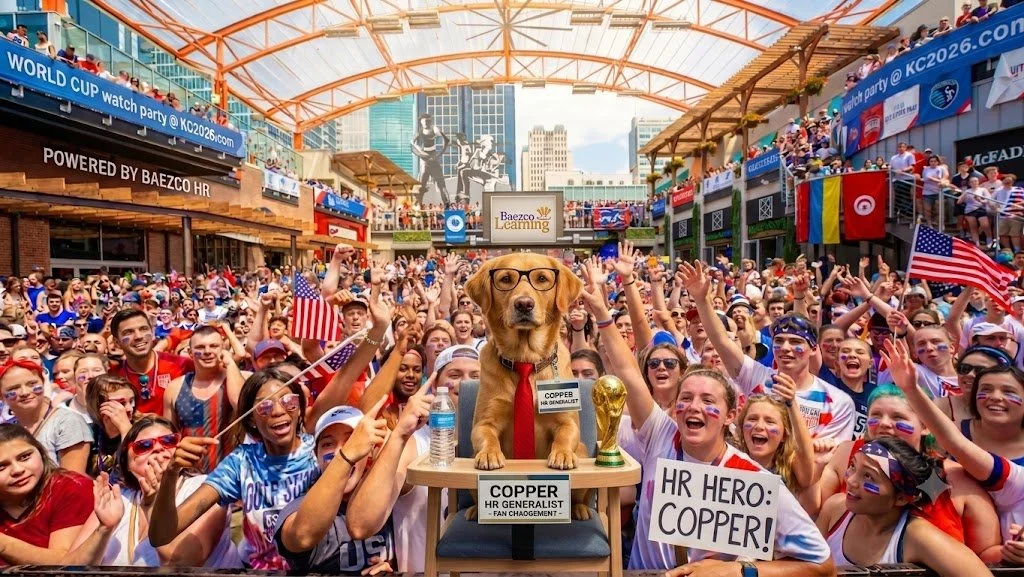
Something is happening in American streets right now that nobody planned for.
Fans from Morocco and Portugal are sharing drinks outside Dallas sports bars. Argentine supporters in baby blue and white are swapping phone numbers with Dutch fans in orange. Scottish guys in kilts are taking photos with Mexican families in Times Square. Nobody told them to do that. No HR policy required it. No diversity training made it happen.
University of Delaware sport management professor Matthew Robinson put it best: "In a world where there are so many forces trying to tear us apart, sport has the power to unite. Watching fans from around the world embrace America, and Americans embrace different cultures, has been inspiring."
The 2026 World Cup has done something quietly remarkable. It has reminded millions of people that connection between different cultures is not as hard as our news feeds suggest. And if you run a business with a team of people from different backgrounds, there is a leadership lesson hiding in plain sight right now.
The Difference Between Diversity and Inclusion
Most companies talk about diversity. Few actually understand inclusion.
Diversity is who is in the room. Inclusion is whether they feel like they belong there.
The World Cup is not diverse just because 48 nations showed up. It is inclusive because the rules are the same for everyone. The field is the same size. The ball is the same ball. Everyone has a shot. Nobody has to check their identity at the door to participate.
That is exactly what your employees want from you. Not a poster on the break room wall. Not a one-day training in February. They want to know that the same rules apply to them as to everyone else. That their ideas get the same hearing. That their path forward is not blocked by something they cannot control.
If your team is diverse but quiet, that is a warning sign. People who do not feel included stop speaking up. They stop contributing fully. They start looking for a door.
Shared Experience Is the Real Team Builder
Here is what the research actually says about what brings teams together.
Amit Kumar, a University of Delaware marketing professor whose research focuses on the power of shared experiences, put it this way: "If you and I both own the same watch, that's an interesting coincidence. But if we both attended the same World Cup match, we would likely feel a much stronger sense of connection because experiences become part of who we are."
That is not just true at a stadium. It is true in your office.
Your team does not bond over org charts. They bond over shared problems solved together, late nights on a deadline, a win they did not expect, a hard conversation they got through. Those moments create the glue. And the glue is what keeps your best people from leaving when a competitor offers them more money.
As a leader, your job is to create those moments. Not manufacture them with forced fun. Create conditions where real work happens together, where people from different backgrounds have to rely on each other, where the outcome matters to all of them equally.
That is where inclusion stops being a program and starts being a culture.
The Similarities Always Outweigh the Differences
Here is something World Cup fans discovered almost immediately when they landed in their host cities.
The person next to them might speak a different language and support a rival team, but they love the same sport, they want their kids to watch, they are frustrated by the same bad calls, and they celebrate the same way when their team scores. As Kumar's research shows: "The similarities become more important than the differences."
That is true in your business too. Your employees, regardless of where they are from or how they grew up, want the same things. They want to be treated fairly. They want their work to matter. They want to feel safe saying something without getting punished for it. They want to grow.
When leaders focus obsessively on managing differences, they miss the common ground that already exists. Stop leading from the differences. Start leading from the shared goals.
What Leaders Can Actually Do Monday Morning
You do not need a new policy to act on this. You need three habits.
First, create shared goals, not just individual ones. When your team wins or loses together, they invest in each other. When everyone is measured in a silo, they have no reason to.
Second, build in real interaction between people who would not normally work together. Cross-functional projects. Small group conversations that are not about a deliverable. The World Cup did not unite people by putting them in the same stadium. It united them by giving them a reason to be in the same stadium at the same time for the same thing.
Third, remove the barriers that stop people from contributing equally. If your quietest employees are also your newest hires or your employees from different cultural backgrounds, pay attention to that. Your loudest voices are not always your best ideas.
Robinson said the real winners of the 2026 World Cup would not be a country. His answer was one word: "Humanity."
You get to decide what the winner looks like inside your company. And it starts with whether your people feel like they belong on the field.
Want help building a workplace where every employee actually shows up fully? Schedule a free 30-minute discovery call with Ricky Baez at baezco.com/contact-us.