
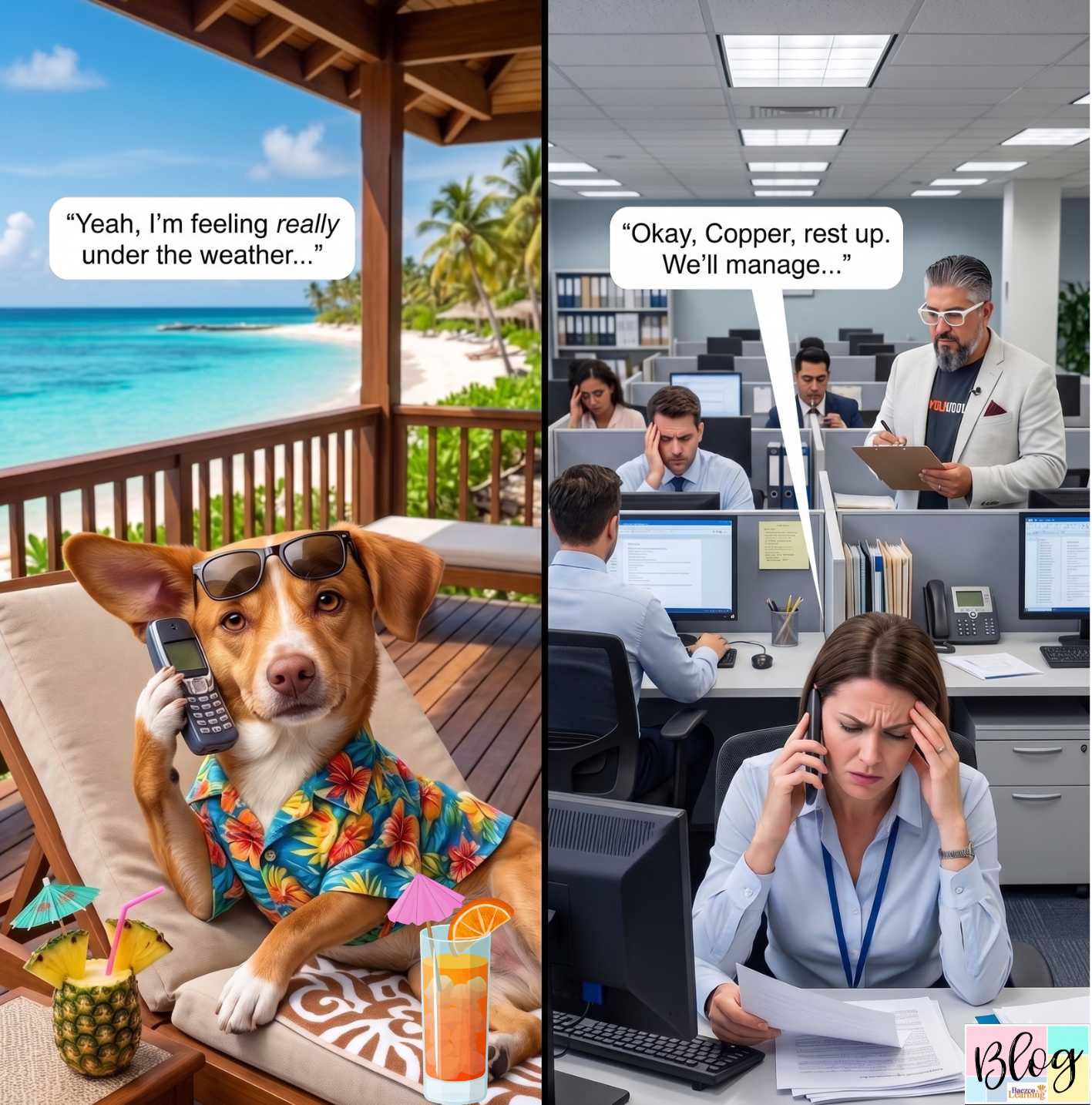
One of your employees calls out sick Monday morning. Stomach bug. You say feel better and move on.
But according to a July 2025 survey of 1,000 U.S. workers, there is a good chance that employee was not sick at all. They needed a mental health day. They just did not trust you enough to say so.
That is not a small problem. That is a leadership problem.
The Numbers Do Not Lie, Even If Your Employees Do
A recent report from TEAM Software found that 42% of U.S. workers have exaggerated physical symptoms to take time off for their mental health. Among Gen Z workers, that number jumps to two out of three. Another 19% simply disguised their mental health day as a sick day entirely.
Here is the part that should bother every business owner: only 10% of workers who took a mental health day felt comfortable being honest with their employer about it and received a positive response.
Think about that. Nine out of ten employees who needed a mental health day either lied about it, said nothing, or told the truth and felt dismissed.
That is not a mental health problem. That is a culture problem. And you own the culture.
Why Employees Do Not Feel Safe Telling the Truth
The 2025 NAMI Workplace Mental Health Poll surveyed more than 2,300 full-time U.S. workers. Forty-two percent said they worry their career would be negatively impacted if they talked about mental health concerns at work. Nearly half said they would worry about being judged.
Only 13% told their manager their mental health was suffering because of work demands.
That means the other 87% stayed quiet. They showed up, dragged themselves through the day, and either performed poorly or eventually left. The same NAMI data found that one in four employees considered quitting due to mental health concerns in the past year. That is turnover you could have prevented with a conversation.
What Psychological Safety Actually Means
There is a phrase that gets thrown around a lot in HR circles: psychological safety. Strip the jargon away and it means this. Your employees feel safe enough to tell you the truth without fearing what happens next.
Research from McKinsey found that only 26% of leaders demonstrate behaviors that create psychological safety for their teams. That means three out of four leaders think they have an open culture while their employees are quietly suffering and covering it up with fake symptoms.
Psychological safety does not mean you become a therapist. It means you set the standard that a mental health day is as valid as a fever. When you model that, your team follows. When you do not, they lie.
What You Can Do Starting This Week
You do not need a full HR department to fix this. You need to change one or two behaviors.
First, normalize the conversation. At your next team meeting, say it out loud: "If you need a mental health day, take it. You do not have to tell me why." That one sentence does more than any wellness program you could buy.
Second, stop requiring details. When an employee calls out, accept the absence without pressing them to prove they are sick. Fear of not being believed is one of the main reasons employees lie in the first place.
Third, check how your managers respond. If a team lead rolls their eyes or passive-aggressively reassigns work when someone calls out, that behavior poisons the whole team. Culture is set at the manager level, not the policy level.
Fourth, look at your data. High absenteeism, high turnover, and low engagement are usually symptoms of a culture where people do not feel safe. Fix the environment, and the numbers change.
The NAMI data backs this up. In workplaces that offer mental health training and support, only 21% of employees report that their productivity suffered because of their mental health. In workplaces without that support, the number climbs to 38%. That is nearly double. The difference is leadership.
Your Team Is Watching What You Model
Your employees are not going to believe mental health days are acceptable just because you add a line to an employee handbook. They are going to believe it when they see you take one. When they see a manager take one. When nobody gets punished for it.
You set the tone every single day. The question is whether you are creating a culture where people can tell the truth, or one where lying feels safer.
Want help building an employee relations strategy where your people actually show up and stay? Schedule a free 30-minute discovery call with Ricky Baez at baezco.com/contact-us.